

Natural selection and adaptationSpec 18.3.1, 18.3.4
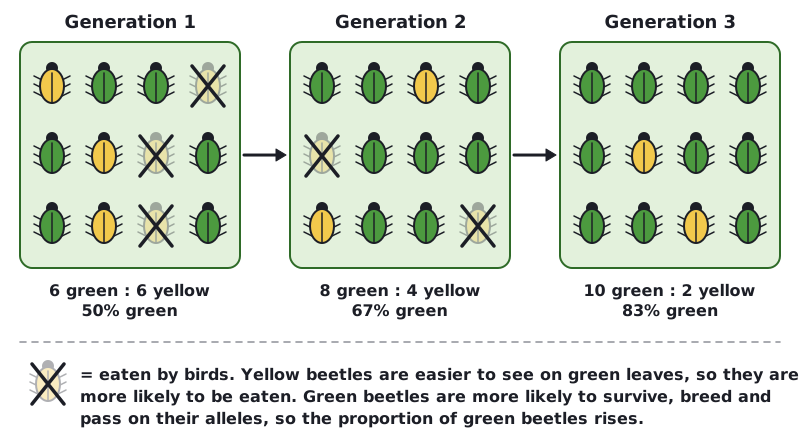
Natural selection is the process by which individuals that are better adapted to their environment survive and pass on their alleles. It can be described in five steps.
- There is genetic variation within populations: individuals have different alleles.
- Organisms produce many offspring, more than the environment can support.
- There is a struggle for survival, including competition for resources such as food, water and mates, and pressure from predators and disease.
- Individuals that are better adapted to the environment have a greater chance of surviving and reproducing than others.
- These individuals pass on their alleles to the next generation, so the alleles for helpful features become more common.
 (opens full size in a new tab)
Supplement (what this means)
Supplement: only for the Extended papers (2 and 4). Core students can skip it. What the labels meanAdaptation is the process, resulting from natural selection, by which populations become more suited to their environment over many generations.
Supplement (what this means)
Supplement: only for the Extended papers (2 and 4). Core students can skip it. What the labels meanNotice that individuals do not change. It is the population that changes, because the proportion of individuals with helpful alleles increases from one generation to the next.
Common mistake:
Do not write that organisms 'adapt because they need to' or that a mutation 'happens because it is needed'. Mutations are random. The environment only selects which individuals survive.