

Digesting starch and protein in detailSpec 7.4.6, 7.4.7
Starch
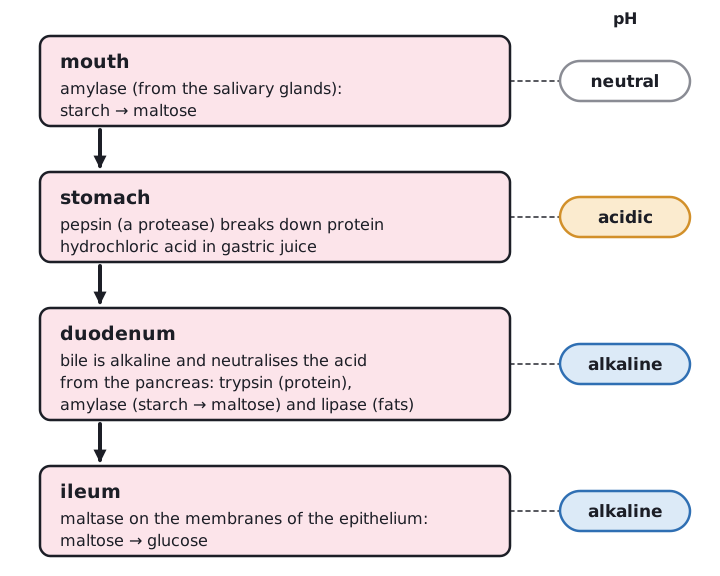
- Amylase from the salivary glands and the pancreas breaks starch down to maltose.
- Maltase breaks maltose down to glucose. Maltase is on the membranes of the epithelium lining the small intestine.
- Glucose is small and soluble, so it can be absorbed into the blood.
Protein
| Protease | Where it works | Conditions |
|---|---|---|
| Pepsin | Stomach | Acidic, because of the hydrochloric acid in gastric juice |
| Trypsin | Small intestine | Alkaline, because of the bile mixed with the food |
Each enzyme has an optimum pH. Pepsin works best in acid and trypsin works best in alkali. Both are proteases, so both break down protein.
 (opens full size in a new tab)
Amylase does not make glucose directly. It makes maltose, and maltase then makes glucose. Link each enzyme to its own product.
Quick check
What is chemical digestion?
Show answer
The breakdown of large insoluble molecules into small soluble molecules.
What does lipase break down fats and oils into?
Show answer
Fatty acids and glycerol.
Where is amylase secreted?
Show answer
Salivary glands and pancreas.
Supplement Which enzyme breaks maltose down to glucose, and where is it found?
Show answer
Maltase, on the membranes of the epithelium lining the small intestine.
Supplement Why does trypsin work in the small intestine but pepsin does not?
Show answer
Trypsin works in alkaline conditions and pepsin works in acidic conditions; bile makes the small intestine alkaline.