

Vertebrate and arthropod groupsSpec 1.3.2, 1.3.3
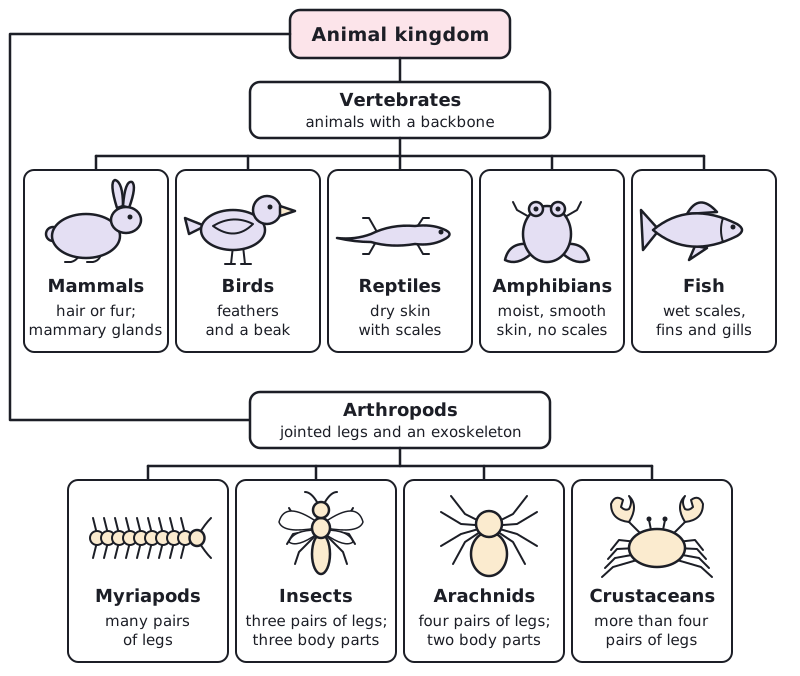
The animal kingdom is split into smaller groups. You need the five groups of vertebrates (animals with a backbone) and four groups of arthropods (animals with jointed legs).
Vertebrates
| Group | Main features |
|---|---|
| Mammals | Body covered with hair or fur; young develop in the mother and are fed on milk from mammary glands; external ears (pinnae) |
| Birds | Body covered with feathers; two wings and two scaly legs; a beak; lay eggs with hard shells |
| Reptiles | Dry skin covered with scales; lay eggs with soft, leathery shells; most live on land |
| Amphibians | Moist, smooth skin without scales; lay jelly-covered eggs in water; larvae (tadpoles) live in water; adults often live on land |
| Fish | Body covered with wet scales; fins; gills for gas exchange; lay soft eggs in water |
Arthropods
All arthropods have a hard exoskeleton, a body made of segments, and jointed legs. They are split into four groups by the number of legs and body parts.
| Group | Main features | Example |
|---|---|---|
| Myriapods | Long body made of many similar segments; many pairs of legs, one or two pairs on each segment; one pair of antennae | Centipede |
| Insects | Body in three parts (head, thorax, abdomen); three pairs of legs; one pair of antennae; usually two pairs of wings | Housefly |
| Arachnids | Body in two parts (cephalothorax and abdomen); four pairs of legs; no antennae and no wings | Spider |
| Crustaceans | More than four pairs of legs; two pairs of antennae; breathe using gills; most live in water | Crab |
 (opens full size in a new tab)
Classifying an organism
To classify an organism, first decide its kingdom using the animal and plant features. Then match its features to the group descriptions. An animal with a backbone, feathers and a beak is a bird. An animal with a hard exoskeleton, eight legs and two body parts is an arachnid.
Exam tip:
Do not name a group from one feature alone. Many groups lay eggs, but only birds have feathers and only mammals have fur and mammary glands.