
Structure of the heartSpec 9.2.1, 9.2.2, 9.2.7, 9.2.9
In short
The heart is a muscular pump made of cardiac muscle, with two atria that receive blood from veins and two ventricles that pump blood into arteries. A septum separates the left and right sides, one-way valves stop blood flowing backwards, and the coronary arteries supply the heart muscle itself with oxygenated blood.
The mammalian heart is a pump made of cardiac muscle. You need to identify these structures in diagrams and images.
| Structure | What it is or does |
|---|---|
| Muscular wall | Contracts to squeeze blood out of the chambers |
| Right atrium and left atrium | Upper chambers that receive blood from veins |
| Right ventricle and left ventricle | Lower chambers that pump blood out into arteries |
| Septum | Wall of muscle between the left and right sides of the heart |
| One-way valves | Stop blood flowing backwards |
| Coronary arteries | Run over the surface of the heart and supply the heart muscle with oxygenated blood (oxygen and glucose) |
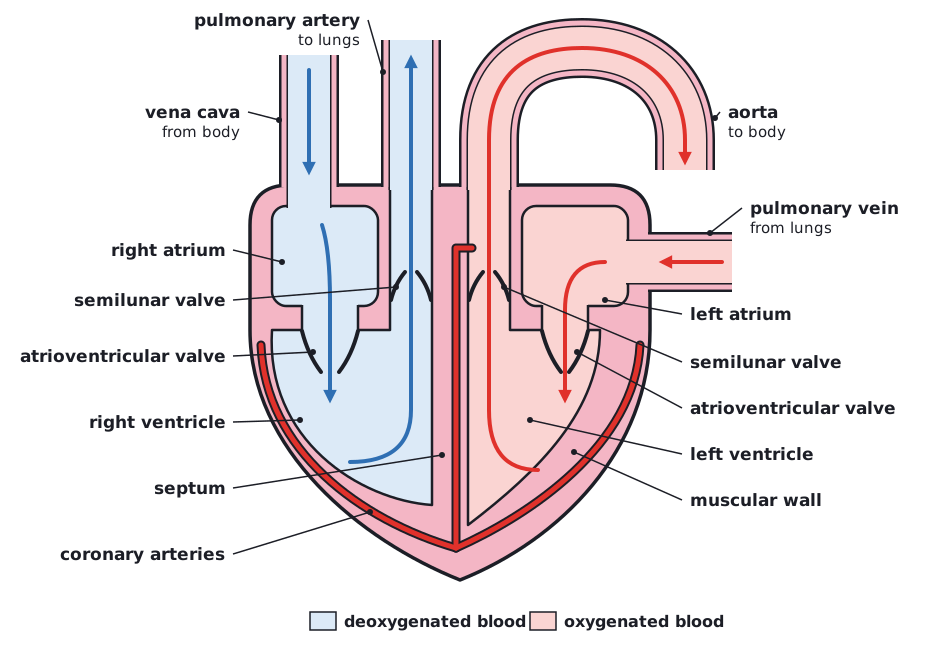 (opens full size in a new tab)
Blood is pumped away from the heart in arteries and returns to the heart in veins.
Supplement (what this means)
Supplement: only for the Extended papers (2 and 4). Core students can skip it. What the labels meanValves
Supplement (what this means)
Supplement: only for the Extended papers (2 and 4). Core students can skip it. What the labels mean- The atrioventricular valves are between the atria and the ventricles.
- The semilunar valves are at the start of the aorta and the pulmonary artery, where blood leaves the ventricles.
Supplement (what this means)
Supplement: only for the Extended papers (2 and 4). Core students can skip it. What the labels meanThe septum
Supplement (what this means)
Supplement: only for the Extended papers (2 and 4). Core students can skip it. What the labels meanThe septum separates the left side of the heart from the right side. The right side holds deoxygenated blood and the left side holds oxygenated blood. The septum stops the two mixing, so blood sent to the body is fully oxygenated.
The heart is drawn as if you are facing the person. The left side of the heart is on the right of the page. The coronary arteries supply the heart itself, not the lungs.
Written and checked against the Cambridge IGCSE Biology (0610) specification · Updated October 2026