

The nervous system and neuronesSpec 14.1.1, 14.1.2, 14.1.3, 14.1.4
Electrical impulses travel along cells called neurones. Neurones carry information quickly between the parts of the body.
The mammalian nervous system has two parts.
- The central nervous system (CNS) consists of the brain and the spinal cord.
- The peripheral nervous system (PNS) consists of the nerves outside of the brain and spinal cord.
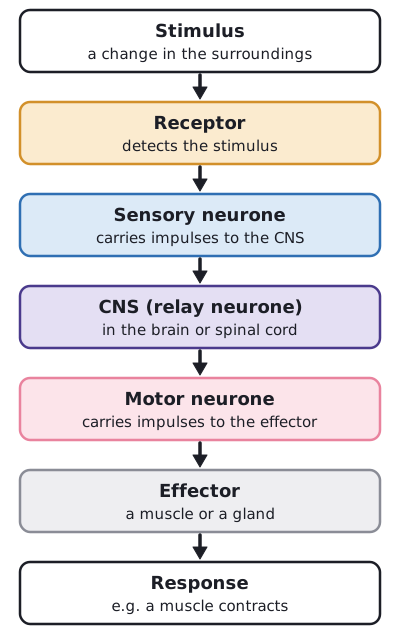
The role of the nervous system is the coordination and regulation of body functions. Receptors detect a change (a stimulus), impulses pass along neurones to the CNS, and the CNS sends impulses to effectors (muscles and glands), which produce a response.
- Stimulus (a change in the surroundings)
- Receptor detects the stimulus
- Impulses travel along a sensory neurone to the CNS
- The CNS coordinates the response
- Impulses travel along a motor neurone to an effector
- Effector (muscle or gland) produces the response
 (opens full size in a new tab)
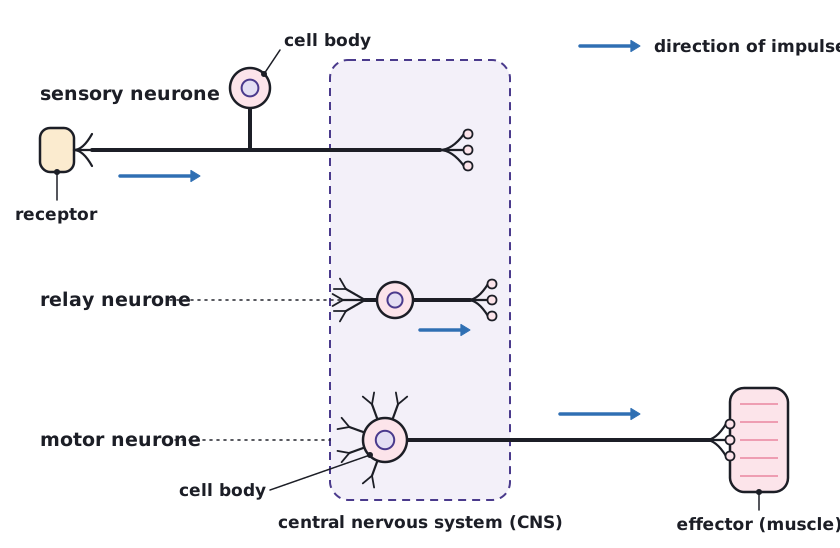
Three types of neurone
| Neurone | Where it carries impulses | How to identify it in a diagram |
|---|---|---|
| Sensory neurone | From a receptor to the CNS | Receptor at one end; the cell body is off to the side of the long fibre; the fibre enters the CNS |
| Relay neurone | Within the CNS, from the sensory neurone to the motor neurone | Short; found entirely inside the CNS; connects the other two types |
| Motor neurone | From the CNS to an effector (a muscle or a gland) | Cell body inside the CNS at one end; long fibre leaving the CNS to the effector |
 (opens full size in a new tab)
Exam tip:
To identify a neurone, ask where it is and which way the impulse goes. Only the relay neurone sits wholly inside the CNS. Remember the PNS is the nerves, not the brain or spinal cord.