
The five kingdomsSpec 1.3.4, 1.3.6
In short
The five kingdoms are animal, plant, fungus, prokaryote and protoctist. Fungi have cell walls made of chitin, have no chloroplasts and feed by absorbing nutrients. Prokaryotes, such as bacteria, are single-celled with no nucleus. Protoctists are mostly single-celled organisms with a nucleus; some have chloroplasts like plants, and others feed like animals.
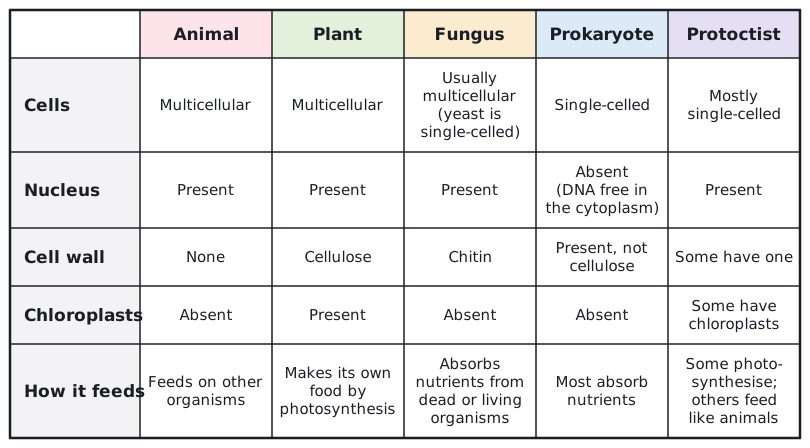
All organisms can be placed in one of five kingdoms: animal, plant, fungus, prokaryote and protoctist. The animal and plant features are in the table in the previous section. The other three kingdoms have these main features.
| Kingdom | Main features | Example |
|---|---|---|
| Fungus | Cell walls made of chitin; no chloroplasts, so they cannot photosynthesise; feed by absorbing nutrients from dead or living organisms; body usually made of threads called hyphae (yeast is single-celled); store glycogen; reproduce with spores | Mucor, yeast |
| Prokaryote | Single-celled; no nucleus (a circular DNA molecule lies free in the cytoplasm, and there may be plasmids); cell wall that is not made of cellulose | Bacteria |
| Protoctist | Mostly single-celled microscopic organisms with a nucleus; some have chloroplasts like plants, others feed like animals | Amoeba, Chlorella |
 (opens full size in a new tab)
Classify an organism by working through the features. Single-celled with no nucleus means prokaryote. Chitin cell walls and no chloroplasts means fungus, even when single-celled like yeast. Single-celled with a nucleus but without chitin walls means protoctist.
Fungi are not plants. They have chitin walls, no chloroplasts, and they absorb nutrients from their surroundings instead of making food by photosynthesis.
Written and checked against the Cambridge IGCSE Biology (0610) specification · Updated October 2026