

The liver, deamination and ureaSpec 13.1.6, 13.1.7, 13.1.8, 13.1.9
Assimilation of amino acids
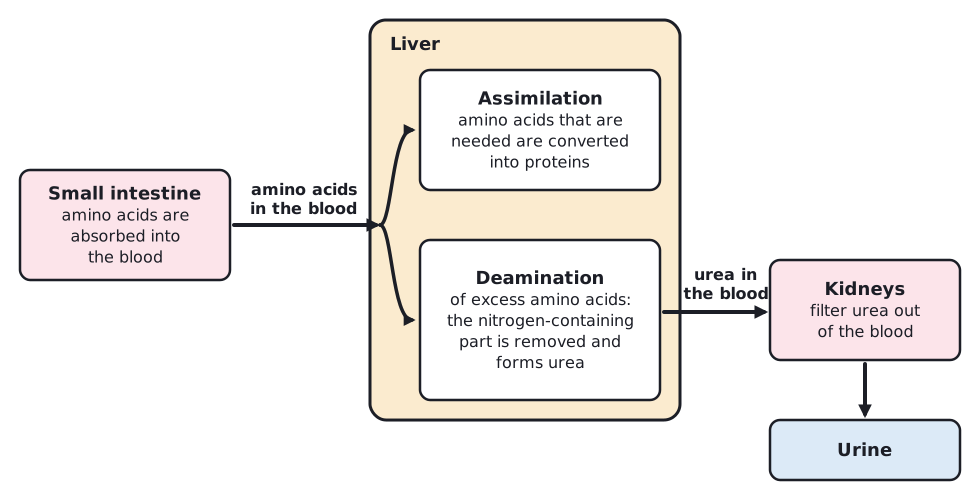
Digestion breaks proteins down into amino acids, which are absorbed into the blood. The blood carries them to the liver. The liver takes up the amino acids it needs and converts them into proteins. This is the assimilation of amino acids.
Deamination and urea
The body does not need all of the amino acids it takes in. The excess amino acids are broken down in the liver. Deamination is the removal of the nitrogen-containing part of amino acids to form urea.
- Amino acids that are in excess of requirements reach the liver.
- The liver carries out deamination: the nitrogen-containing part of each amino acid is removed.
- The nitrogen-containing part forms urea.
- Urea passes into the blood and is carried to the kidneys.
- The kidneys filter urea from the blood and it leaves the body in urine.
 (opens full size in a new tab)
Why excretion of urea matters
Urea is toxic. If it were not removed, it would build up in the blood and body cells and cause harm. Excretion is important because it removes this toxic waste from the body.
If asked why urea must be excreted, say it is toxic (poisonous) and would build up. Do not say urea is harmless or safe.
Deamination happens in the liver, not the kidneys. The kidneys only remove the urea from the blood. Deamination is not digestion.
Quick check
Which organ excretes carbon dioxide?
Show answer
The lungs.
Name the tube that carries urine from the bladder out of the body.
Show answer
The urethra.
Supplement Name the two regions seen in a section through a kidney.
Show answer
The cortex (outer) and the medulla (inner).
Supplement Which substance is all reabsorbed into the blood from the nephron?
Show answer
Glucose.
Supplement Where is urea formed, and from what?
Show answer
In the liver, from excess amino acids.