
The skin and temperature controlSpec 14.4.6, 14.4.7, 14.4.8
In short
Temperature control keeps human body temperature constant at about 37 °C, coordinated by the brain. When too hot, sweat evaporates and takes heat from the body, and vasodilation widens the arterioles supplying skin surface capillaries so more heat is lost. When too cold, shivering releases heat, vasoconstriction reduces blood flow near the surface, and raised hairs trap insulating air.
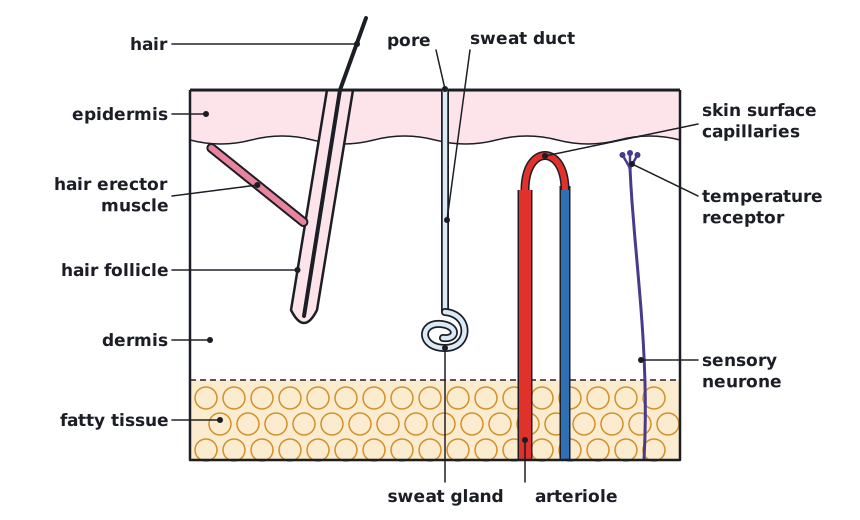
Mammals keep their internal body temperature constant (about 37 °C in humans). Temperature receptors in the skin send impulses along sensory neurones to the brain, and the brain also detects the temperature of the blood. The brain compares the body temperature with the set point and coordinates the responses of the effectors: sweat glands, muscles, hair erector muscles and arterioles.
 (opens full size in a new tab)
| Structure | Role in temperature control |
|---|---|
| Hairs | Raised in the cold to trap a layer of air (insulation) |
| Hair erector muscles | Contract to raise the hairs; relax to lower them |
| Sweat glands | Release sweat onto the skin surface |
| Receptors | Detect temperature changes |
| Sensory neurones | Carry impulses from the receptors to the brain |
| Blood vessels | Arterioles supplying skin surface capillaries change in width |
| Fatty tissue | Insulation: reduces heat loss |
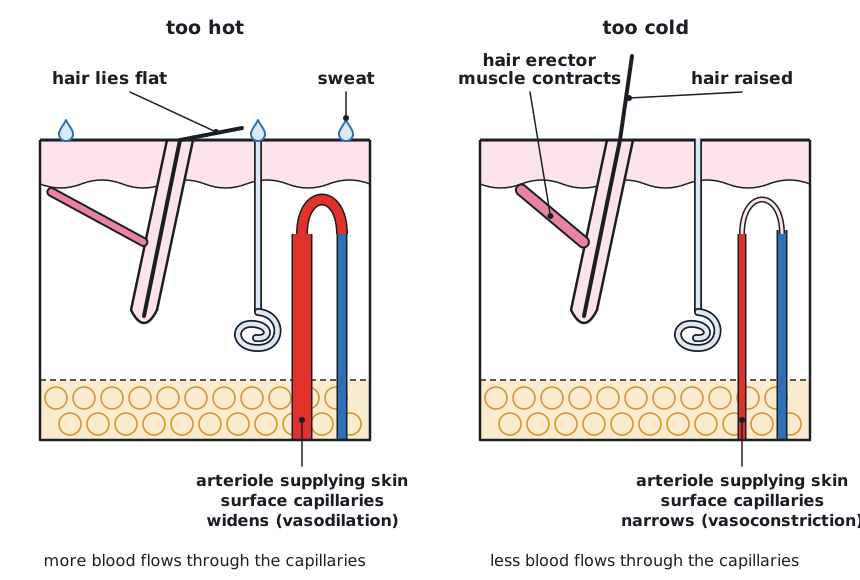
When the body is too hot
- Sweating: sweat evaporates from the skin and takes heat from the body.
- Vasodilation: the arterioles supplying the skin surface capillaries widen, so more blood flows through the capillaries and more heat is lost.
When the body is too cold
- Shivering: muscles contract rapidly, and respiration in them releases heat.
- Vasoconstriction: the arterioles supplying the skin surface capillaries narrow, so less blood flows near the surface and less heat is lost.
- Insulation: hairs are raised by the hair erector muscles to trap air, and fatty tissue under the skin reduces heat loss.
 (opens full size in a new tab)
Blood vessels do not move up and down towards the skin surface. The arterioles get wider (vasodilation) or narrower (vasoconstriction).
Quick check
What is homeostasis?
Show answer
The maintenance of a constant internal environment.
What does insulin do to blood glucose concentration?
Show answer
It decreases it.
Supplement What is a set point?
Show answer
The normal level of a factor that the body keeps steady by negative feedback.
Supplement What does the liver do with glucose when insulin is secreted?
Show answer
Converts it to glycogen for storage.
Supplement What happens to the arterioles supplying the skin surface capillaries when the body is too cold?
Show answer
They narrow (vasoconstriction).
Written and checked against the Cambridge IGCSE Biology (0610) specification · Updated October 2026