

Pyramids of numbers and biomassSpec 19.2.11, 19.2.12
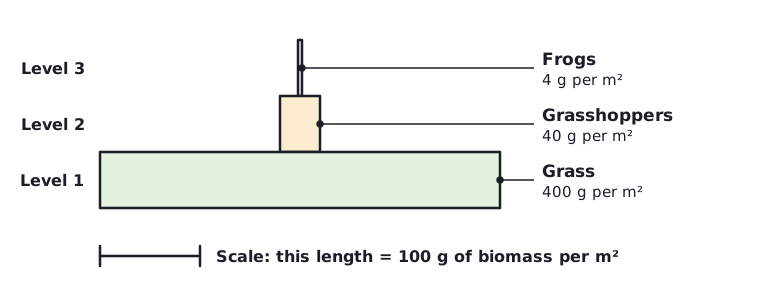
An ecological pyramid has one horizontal bar for each trophic level, with the producers at the bottom. The length of each bar is drawn to scale.
- A pyramid of numbers shows the number of organisms at each trophic level.
- A pyramid of biomass shows the mass of living material (biomass) at each trophic level, for example in g per m².
Drawing a pyramid
- Choose a scale so that the longest bar fits on the page.
- Draw a bar for each trophic level, with the producers at the bottom. Make the length of each bar proportional to its value.
- Centre the bars on a vertical line and label each bar with the organism.
 (opens full size in a new tab)
Pyramids of numbers can be the wrong shape
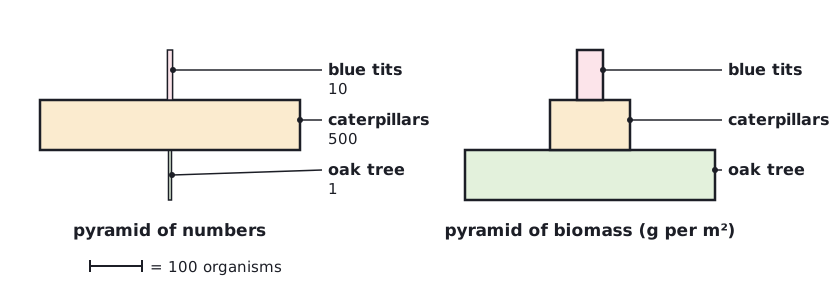
A pyramid of numbers does not always get narrower. One large oak tree can support hundreds of caterpillars, so the bar for the producers is shorter than the bar above it. The pyramid is not pyramid-shaped and is often described as inverted. The size of the organisms is ignored.
 (opens full size in a new tab)
Advantage of a pyramid of biomass
A pyramid of biomass is usually a better way to represent a food chain than a pyramid of numbers, because:
- it takes the size of the organisms into account, so one large tree is not shown as equal to one tiny insect;
- it is usually pyramid-shaped, because there is less biomass at each higher trophic level.
Exam tip:
To explain an odd-shaped pyramid of numbers, say that the producer is one very large organism that supports many smaller consumers. Say that numbers ignore the size of organisms but biomass does not.