

The endocrine systemSpec 7.1
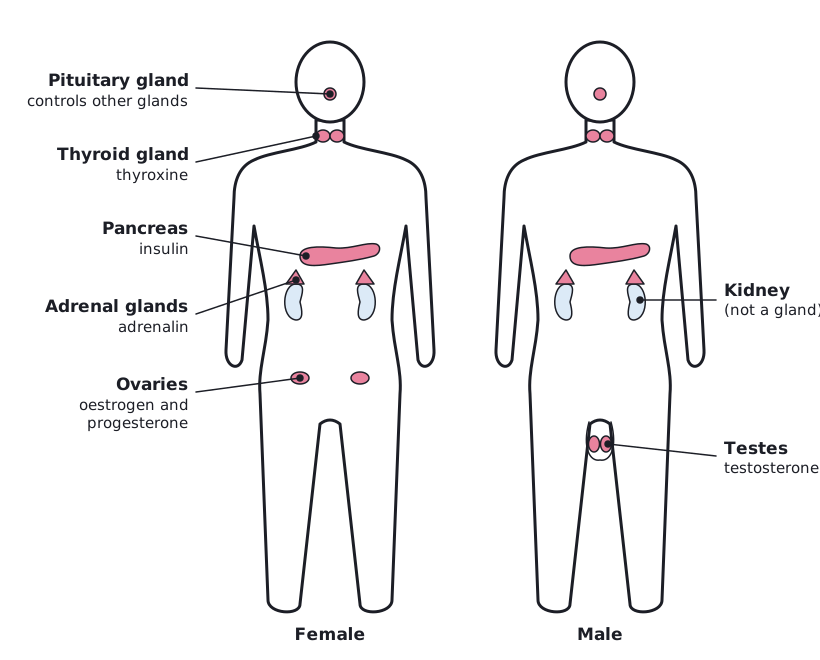
Hormones are chemical messengers. They are made in endocrine glands and released straight into the blood. The blood plasma carries them around the whole body, but each hormone only affects its target organs.
- An endocrine gland secretes a hormone into the blood.
- The blood carries the hormone around the body.
- The hormone reaches its target organ and causes a response.
| Gland | Where it is | Hormone made |
|---|---|---|
| Pituitary gland | At the base of the brain | Releases hormones that control other glands and organs |
| Thyroid gland | In the neck | Thyroxine |
| Pancreas | In the abdomen, below the stomach | Insulin |
| Adrenal glands | One on top of each kidney | Adrenalin |
| Ovaries | In the lower abdomen of a female | Oestrogen and progesterone |
| Testes | In the scrotum of a male | Testosterone |
- The pituitary gland releases FSH and LH, which act on the ovaries, and TSH, which acts on the thyroid gland.
- The pancreas also makes a second hormone, glucagon.
 Tap to enlarge
Adrenalin and fight or flightSpec 7.2Higher tier
Adrenalin is produced by the adrenal glands. It prepares the body for fight or flight, for example when you are frightened or in danger. It makes the body ready to use a lot of energy quickly.
| Effect | Why it helps |
|---|---|
| Increased heart rate | Blood is pumped around the body faster |
| Increased blood pressure | Blood is pushed to the organs more quickly |
| Increased blood flow to the muscles | Muscles get more oxygen and glucose for respiration, so they can release more energy |
| Raised blood sugar level | Adrenalin stimulates the liver to change glycogen into glucose, which is released into the blood |
Thyroxine and negative feedbackSpec 7.3Higher tier
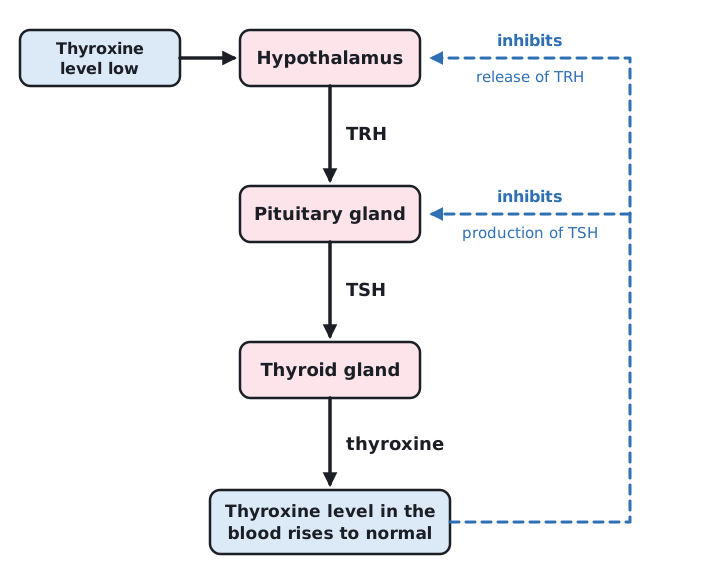
Thyroxine is made by the thyroid gland. It controls metabolic rate, which is the rate of the chemical reactions in the body. Its level is kept steady by negative feedback.
- Negative feedback
- A change in a level causes a response that reverses the change and brings the level back to normal.
- A low level of thyroxine stimulates the hypothalamus to produce TRH.
- TRH causes the pituitary gland to release TSH.
- TSH acts on the thyroid gland to produce thyroxine.
- The thyroxine level rises back to normal.
- When the thyroxine level is normal, thyroxine inhibits the release of TRH and the production of TSH. This stops the level rising too far.
 Tap to enlarge
Quick check
How are hormones transported from endocrine glands to target organs?
Show answer
In the blood (plasma).
Which gland produces insulin?
Show answer
The pancreas.
Name the four effects of adrenalin. (Higher)
Show answer
Increased heart rate, increased blood pressure, increased blood flow to the muscles, and raised blood sugar level.
Which hormone does the pituitary release to make the thyroid produce thyroxine? (Higher)
Show answer
TSH.