

Physical barriers and chemical defencesSpec 5.12
The body has first lines of defence that try to stop pathogens getting in or kill them before they can cause harm.
| Defence | Type | How it protects |
|---|---|---|
| Skin | Physical barrier | Forms a barrier that pathogens cannot easily pass through |
| Mucus | Physical barrier | A sticky liquid in the nose and airways that traps pathogens |
| Cilia | Physical barrier | Tiny hairs on the cells lining the airways that move the trapped mucus up and away from the lungs |
| Lysozymes | Chemical defence | Enzymes in tears and other secretions that break down the cell walls of bacteria |
| Hydrochloric acid | Chemical defence | Acid in the stomach that kills pathogens swallowed with food and drink |
The specific immune systemSpec 5.13
If a pathogen gets past the first defences, the specific immune system responds. It is called specific because the response is aimed at one particular pathogen.
- Antigen
- A molecule, usually on the surface of a pathogen, that the immune system recognises as foreign and that triggers an immune response.
- Antibody
- A protein made by white blood cells (lymphocytes) that binds to a specific antigen.
- Memory lymphocyte
- A white blood cell that stays in the body after an infection and can respond quickly if the same antigen returns.
The primary response
- The body is exposed to a pathogen.
- The antigens on the pathogen trigger an immune response.
- Lymphocytes with antibodies that fit the antigen divide, and the response causes the production of antibodies.
- The antibodies bind to the antigens on the pathogen and help to destroy it.
- The antigens also trigger production of memory lymphocytes.
The secondary response
If the same pathogen enters the body again, the memory lymphocytes recognise its antigens. They respond faster and make more antibodies than the first time, so the pathogen is destroyed before it can make the person ill. The person is now immune to that pathogen.
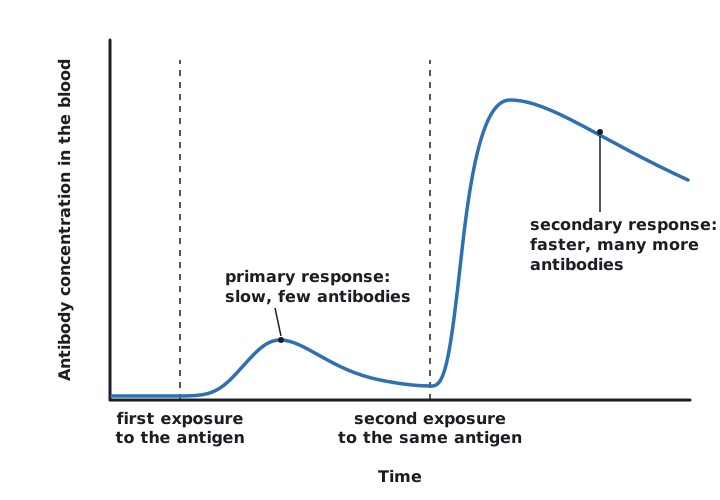 Tap to enlarge
ImmunisationSpec 5.14
Immunisation gives protection from a disease without having to catch it. A person is given an inactive form of the pathogen, for example a dead or weakened one, usually by injection.
- The inactive pathogen is put into the body. It cannot cause the disease, but its antigens are still present.
- The antigens trigger an immune response and antibodies are made.
- Memory lymphocytes are produced.
- If the live pathogen enters later, the memory lymphocytes carry out a fast secondary response. Large numbers of antibodies are made quickly and the person does not become ill.
| Natural infection | After immunisation | |
|---|---|---|
| Pathogen present | Live pathogen | Inactive pathogen, which cannot cause the disease |
| Memory lymphocytes made? | Yes | Yes |
| Person becomes ill? | Yes, during the first (primary) response | No |
Doctors sometimes give a second injection, called a booster, to increase the number of memory lymphocytes made.
Advantages and disadvantages of immunisationSpec 5.15BTriple only
In a discuss question you must give both sides. Use the ideas below.
| Advantages | Disadvantages |
|---|---|
| Protects the person from serious diseases | Some people have side effects, such as a sore arm or fever; very rarely, serious reactions happen |
| Reduces the spread of disease, so epidemics can be prevented | It does not always work, and some people are still infected |
| Some diseases have been almost wiped out | Boosters may be needed to keep protection high |
| Protects people who cannot be vaccinated, through herd immunity | Some pathogens change often, so new vaccines are needed |
Herd immunity
Herd immunity happens when a large proportion of a population is immune to a disease. The pathogen finds it hard to spread because most people it reaches are immune. This also protects the few who are not immune, such as babies who are too young to be vaccinated or people whose immune system is weak.
If fewer people are vaccinated, herd immunity is lost and the disease can spread through the population again.
Quick check
Name two physical barriers in the human body.
Show answer
Any two of: skin, mucus, cilia.
What do lysozymes do?
Show answer
They are enzymes that break down the cell walls of bacteria.
What is an antigen?
Show answer
A molecule, usually on the surface of a pathogen, that triggers an immune response.
Why is the secondary response better than the primary response?
Show answer
Memory lymphocytes make it faster and produce more antibodies.
Triple only: what is herd immunity?
Show answer
When a large proportion of the population is immune, so the pathogen cannot spread easily and non-immune people are protected.