

Animal and plant cellsSpec 1.1
Animal and plant cells are eukaryotic cells. Their genetic material is enclosed in a nucleus. Each structure inside a cell, called a sub-cellular structure, has a job, and you need to link each structure to its function.
| Structure | Function | Animal cell | Plant cell |
|---|---|---|---|
| Nucleus | Contains the genetic material (DNA) and controls the activities of the cell | Yes | Yes |
| Cell membrane | Controls the movement of substances into and out of the cell | Yes | Yes |
| Mitochondria | Where aerobic respiration takes place, releasing energy for the cell | Yes | Yes |
| Ribosomes | Where proteins are made (protein synthesis) | Yes | Yes |
| Cell wall | Made of cellulose. Strengthens the cell and supports it | No | Yes |
| Chloroplasts | Contain chlorophyll, which absorbs light for photosynthesis | No | Yes |
| Vacuole | Contains cell sap, a solution of sugars and salts, and helps keep the cell firm | No | Yes |
Plant cells have three structures that animal cells do not: a cell wall, chloroplasts and a vacuole. Chloroplasts are only found in the green parts of a plant that photosynthesise, such as leaf cells.
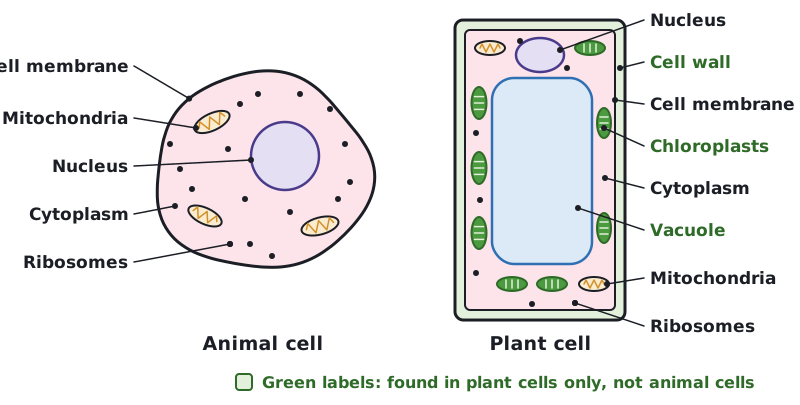 Tap to enlarge