

Responses to heat and coldSpec 7.12B
When the body is too hot
- Sweat glands release sweat onto the skin. Sweat evaporates and takes heat from the skin, which cools the body.
Higher tier
- Vasodilation: the blood vessels supplying the skin surface widen. More blood flows near the surface, so more heat is lost to the surroundings.
When the body is too cold
- Shivering: muscles contract rapidly. This needs more respiration in the muscle cells, which transfers energy as heat and warms the body.
Higher tier
- Vasoconstriction: the blood vessels supplying the skin surface narrow. Less blood flows near the surface, so less heat is lost.
- Sweating is reduced when the body is cold.
Higher tier
Higher tier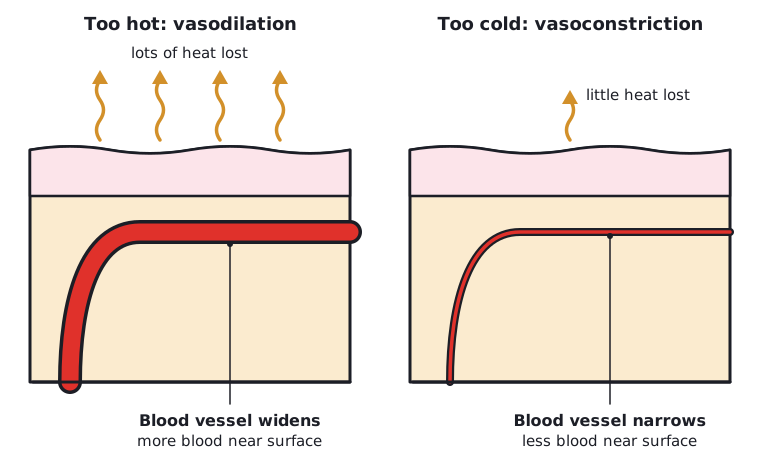 Tap to enlarge
Vasodilation brings more blood near the surface to lose heat; vasoconstriction reduces heat loss.
Tap to enlargeQuick check
Define homeostasis.
Show answer
Maintaining a constant internal environment in response to internal and external change.
Why does a high body temperature stop reactions in cells? (Triple only)
Show answer
Enzymes are denatured, so substrates no longer fit the active site.
What happens to animal cells if the blood is too dilute? (Triple only)
Show answer
Water enters by osmosis. The cells swell and may burst.
Which part of the brain coordinates temperature control? (Triple only)
Show answer
The hypothalamus.
How does shivering warm the body? (Triple only)
Show answer
Muscles contract rapidly. Respiration in the muscle cells transfers energy as heat.