

Leaf structureSpec 6.11B
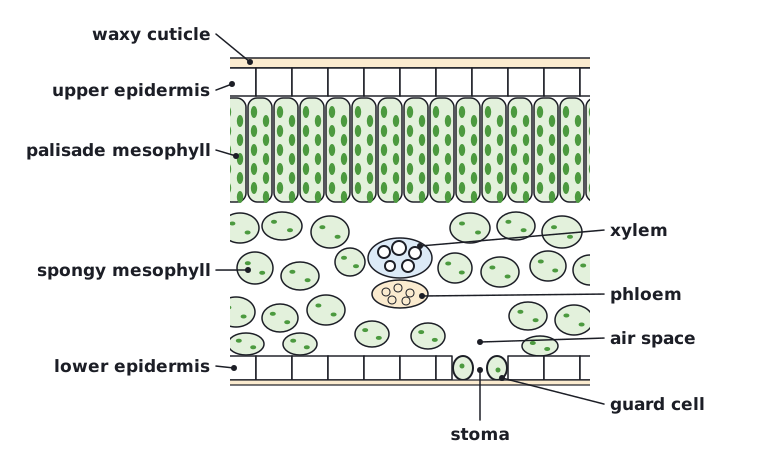
A leaf is adapted to absorb light for photosynthesis and to allow gas exchange of carbon dioxide and oxygen.
| Structure | Adaptation | How it helps |
|---|---|---|
| Whole leaf | Broad, flat and thin | Large surface area to absorb light, and a short distance for gases to diffuse |
| Waxy cuticle | A waxy, waterproof layer on the surface | Reduces water loss by evaporation |
| Upper epidermis | A thin layer of transparent cells | Lets light through to the cells underneath |
| Palisade mesophyll | Tightly packed, tall cells near the top of the leaf, with many chloroplasts | Most photosynthesis takes place here, close to the light |
| Spongy mesophyll | Loosely arranged cells with air spaces between them | Carbon dioxide can diffuse through the leaf to the cells, and oxygen can diffuse out |
| Stomata and guard cells | Pores, mostly in the lower epidermis, opened and closed by guard cells | Allow gases to enter and leave, and control water loss |
| Xylem and phloem (veins) | Vascular bundles running through the leaf | Xylem brings water for photosynthesis. Phloem carries sucrose away. |
 Tap to enlarge