

DiffusionSpec 1.15
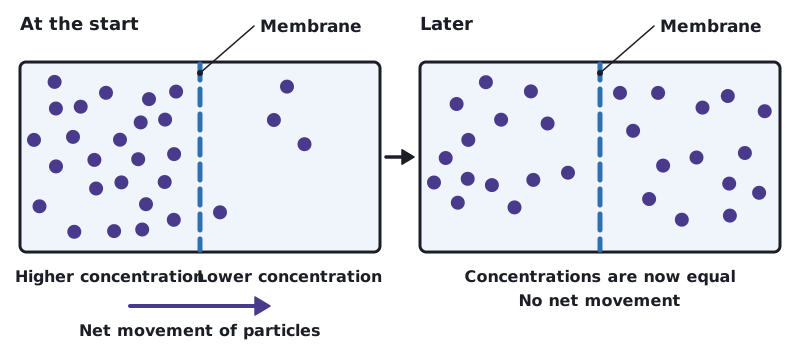
Diffusion is the net movement of particles from an area of higher concentration to an area of lower concentration. The particles move down a concentration gradient. It is a passive process, so it does not need energy from respiration.
Oxygen, carbon dioxide and dissolved substances can diffuse into and out of cells through the cell membrane. The rate of diffusion is higher when:
- the concentration gradient is steeper, because there is a bigger difference in concentration
- the temperature is higher, because particles have more kinetic energy and move faster
- the surface area is larger, because more particles can cross at once
 Tap to enlarge