

Producing monoclonal antibodiesSpec 5.21B
Monoclonal antibodies are identical antibodies, all made from one type of cell, that bind to only one specific antigen.
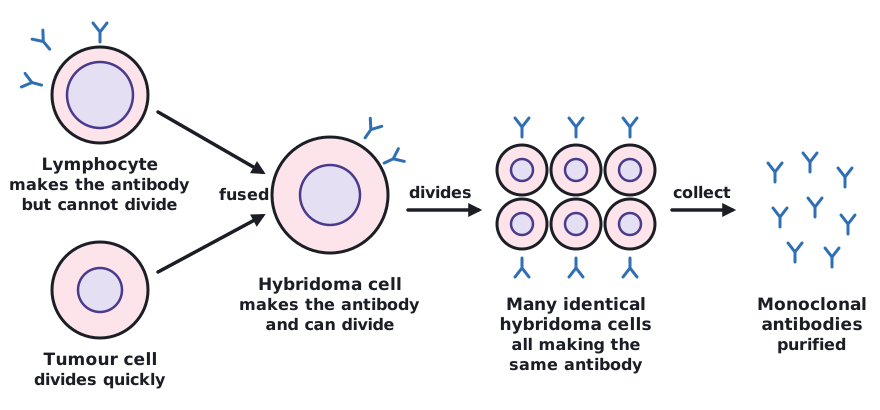
- An animal is exposed to the antigen, so it makes lymphocytes that produce the desired antibody.
- These lymphocytes are collected. They make the right antibody but they do not divide.
- They are fused with a tumour cell, which divides very quickly. This makes a hybridoma cell.
- The hybridoma cells divide and so make many identical cells. As they divide, the hybridoma cells produce antibodies.
- The antibodies are collected and purified.
A hybridoma cell has the properties of both its parent cells: it makes the desired antibody (from the lymphocyte) and it can divide again and again (from the tumour cell).
 Tap to enlarge