

Correcting eye defectsSpec 2.17B
| Defect | Correction |
|---|---|
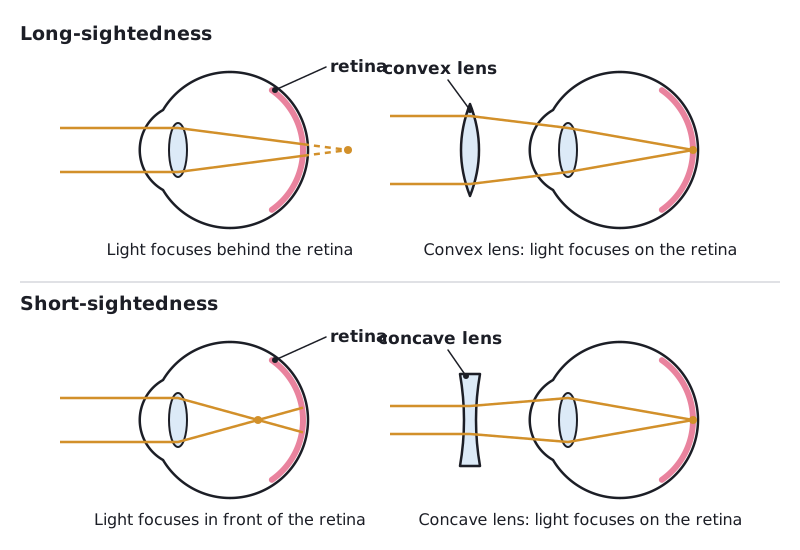
| Long-sightedness | A convex lens (glasses or contact lenses) bends light inwards before it enters the eye, so it focuses on the retina instead of behind it. |
| Short-sightedness | A concave lens (glasses or contact lenses) spreads the light out before it enters the eye, so it focuses on the retina instead of in front of it. |
| Long- or short-sightedness (other option) | Laser eye surgery changes the shape of the cornea, so that light is focused on the retina. |
| Cataracts | Surgery removes the cloudy lens and replaces it with an artificial lens. |
 Tap to enlarge
Quick check
What does the iris do?
Show answer
It controls how much light enters the eye.
What is the difference between rod and cone cells?
Show answer
Rods work in dim light and do not detect colour. Cones detect colour and work in bright light.
What causes cataracts?
Show answer
The lens becomes cloudy, so less light reaches the retina.
What type of lens corrects short-sightedness?
Show answer
A concave lens.
Why can some people not tell red and green apart?
Show answer
One or more types of cone cell are missing or not working properly.