

Energy loss and pyramids of biomassSpec 9.7B
Producers absorb only a small part of the light energy that reaches them. The energy stored in their biomass is passed to the next trophic level when they are eaten, and so on along the food chain.
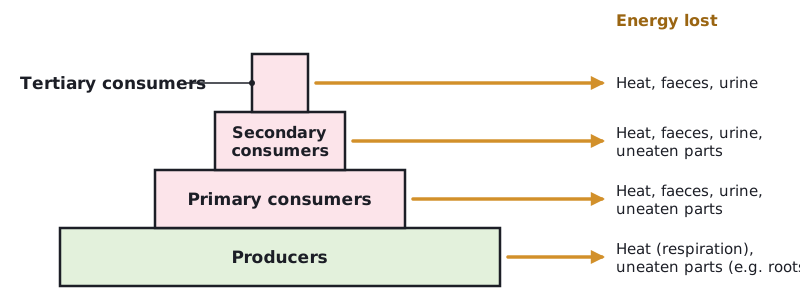
At each trophic level some energy is transferred to less useful forms, so less is available to the next level. Energy is lost because:
- not all of the organism is eaten (for example bones, roots or hair), and some of what is eaten is not digested and is lost in faeces;
- energy is released by respiration and transferred to the surroundings as heat;
- energy is used for movement and for keeping warm in mammals and birds;
- energy is lost in waste such as urine.
This has three effects:
- There are fewer organisms at each successive trophic level, because less energy and less biomass is available to support them.
- Food chains are limited in length, because there is too little energy left to support more trophic levels.
- A pyramid of biomass is wide at the bottom and gets narrower at each level. Each bar shows the dry mass of living material at that trophic level, and the producers are at the base.
 Tap to enlarge