

Protein synthesis: transcription and translationSpec 3.8B
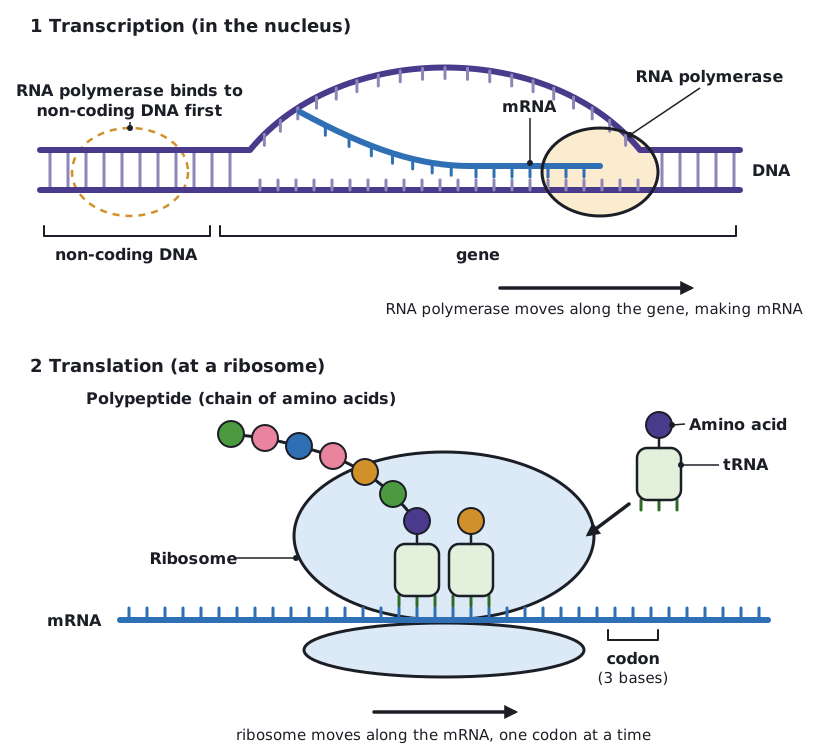
Protein synthesis has two main stages. In transcription, a copy of the gene is made as a strand of mRNA. In translation, the mRNA is used to build a polypeptide at a ribosome.
Transcription (in the nucleus)
- RNA polymerase binds to the non-coding DNA located in front of a gene.
- RNA polymerase produces a complementary mRNA strand from the coding DNA of the gene.
- The mRNA moves out of the nucleus into the cytoplasm.
Translation (at a ribosome)
- The mRNA attaches to a ribosome.
- The mRNA is read in triplets of bases called codons. Each codon codes for a specific amino acid.
- tRNA molecules transfer amino acids to the ribosome. Each tRNA carries the amino acid that matches a codon on the mRNA.
- The amino acids are linked together to form a polypeptide, which folds into a protein.
 Tap to enlarge