

The lifecycle of a virusSpec 5.7B
Viruses are not cells and cannot reproduce on their own. They reproduce inside a host cell, using the host's cell machinery. A virus can follow one of two pathways.
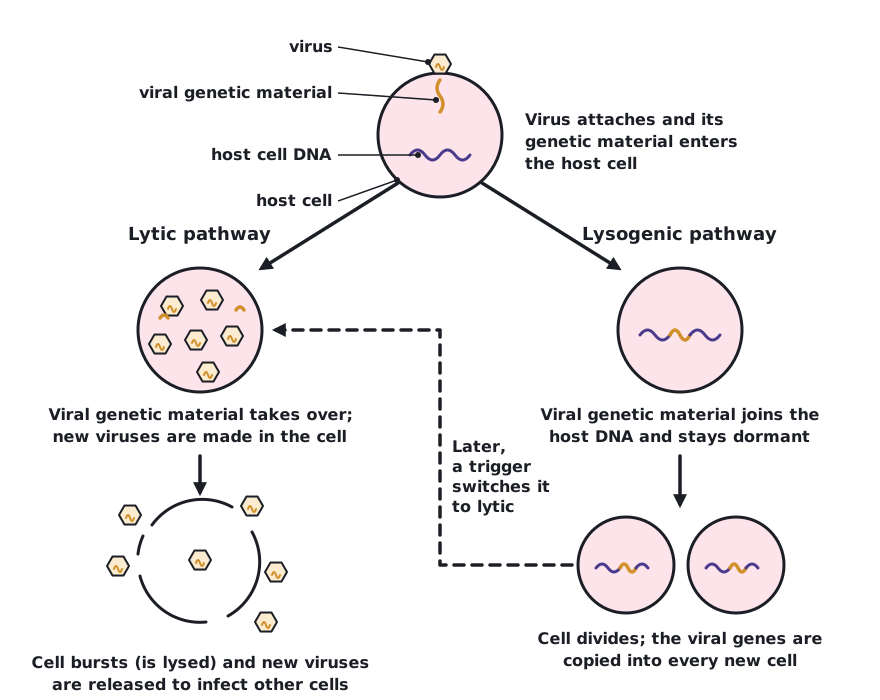
The lytic pathway
- The virus attaches to a host cell and its genetic material enters the cell.
- The viral genetic material takes over the host cell and the cell makes new virus parts.
- New viruses are assembled inside the cell.
- The cell bursts open (it is lysed) and the new viruses are released to infect other cells.
The lysogenic pathway
- The virus attaches and its genetic material enters the host cell.
- The viral genetic material becomes part of the host cell's DNA.
- The virus stays dormant (inactive). The host cell does not burst and does not show harm. When the host cell divides, the viral genetic material is copied too, so every new cell contains it.
- At a later time, something may trigger the viral genetic material to become active, and the virus then follows the lytic pathway.
| Lytic | Lysogenic | |
|---|---|---|
| Viral genetic material | Takes over the cell straight away | Joins the host DNA and stays inactive |
| New viruses made? | Yes, immediately | Not until the virus becomes active |
| Host cell | Burst open and killed | Survives and divides, copying the viral genes |
 Tap to enlarge