

EutrophicationSpec 9.9
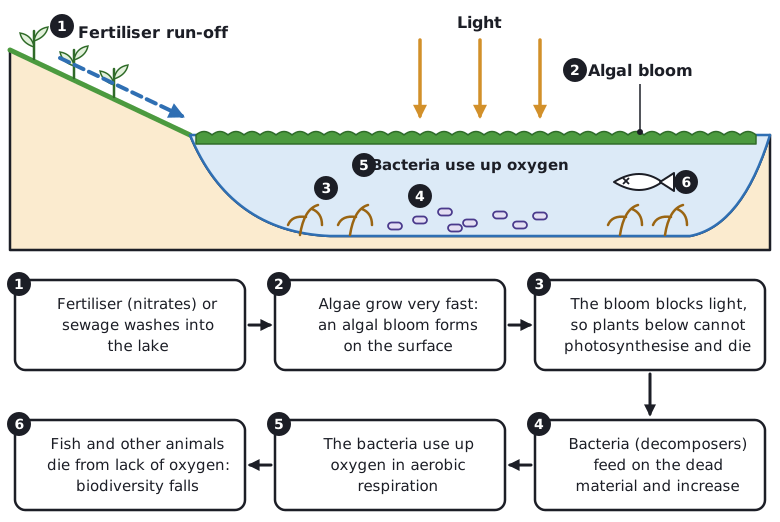
Eutrophication happens when too many nutrients, such as nitrates from fertilisers or sewage, run off into lakes and rivers.
- Nitrates from fertilisers or sewage are washed into the water.
- Algae in the water grow very quickly because of the extra nutrients, forming a layer on the surface (an algal bloom).
- The layer blocks light, so plants and algae lower down cannot photosynthesise and die.
- Bacteria (decomposers) feed on the dead material and their numbers increase.
- The bacteria use up oxygen in the water for aerobic respiration.
- Fish and other aquatic animals die from lack of oxygen, so biodiversity falls.
 Tap to enlarge