

The pentadactyl limbSpec 4.6B
The pentadactyl limb is a limb with five digits. The same basic pattern of bones is found in the limbs of many vertebrates, including humans, bats, whales and frogs.
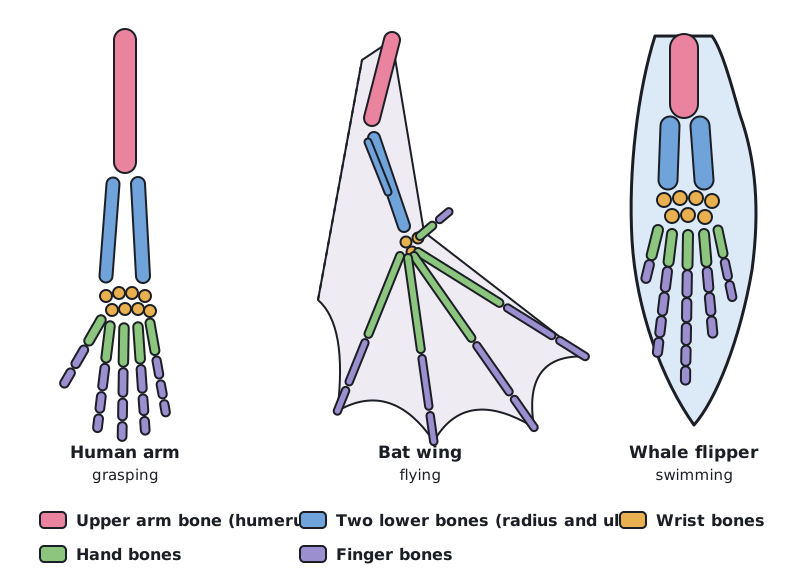
Although these limbs do different jobs (grasping, flying, swimming, jumping), they have the same basic arrangement of bones: one upper bone, two lower bones, then wrist, hand and finger bones. The size and shape of the bones differ to suit each function.
This provides evidence for evolution. The similar bone structure suggests the animals share a common ancestor, and natural selection has adapted the limb to different ways of life over time. If each animal had evolved separately, there would be no reason for the same bone pattern.
 Tap to enlarge