

Stone toolsSpec 4.5
Early humans made tools from stone. Stone tools survive for a very long time, so they give evidence about how early humans lived and how their skills developed.
Development of stone tools over time
- The oldest tools are very simple, such as stones with a few chips knocked off to make a sharp edge.
- Over time tools became more complex and better made: more carefully shaped and more specialised for different jobs.
- This suggests that early humans developed greater skill and intelligence, which fits with fossil evidence of larger brains.
Dating stone tools
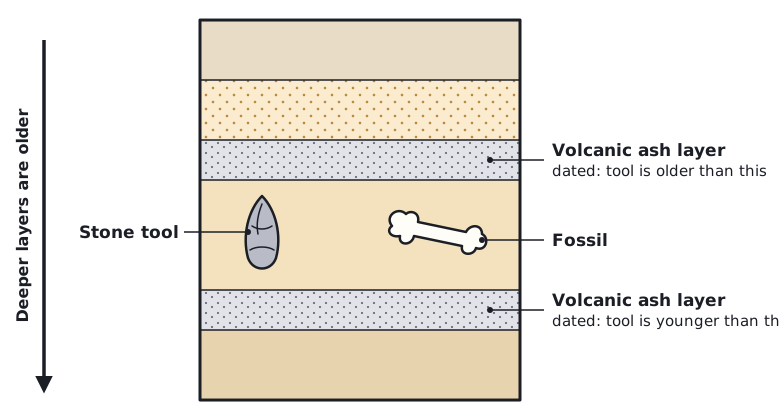
Scientists can date stone tools from their environment. A tool is found in a layer of rock or sediment. The age of that layer, or of materials found with the tool such as volcanic ash, can be worked out. The tool is then taken to be about the same age as the layer it was found in. Layers are laid down one on top of another, so deeper layers are usually older.
 Tap to enlarge