
Physical barriers and chemical defencesSpec 5.12
In short
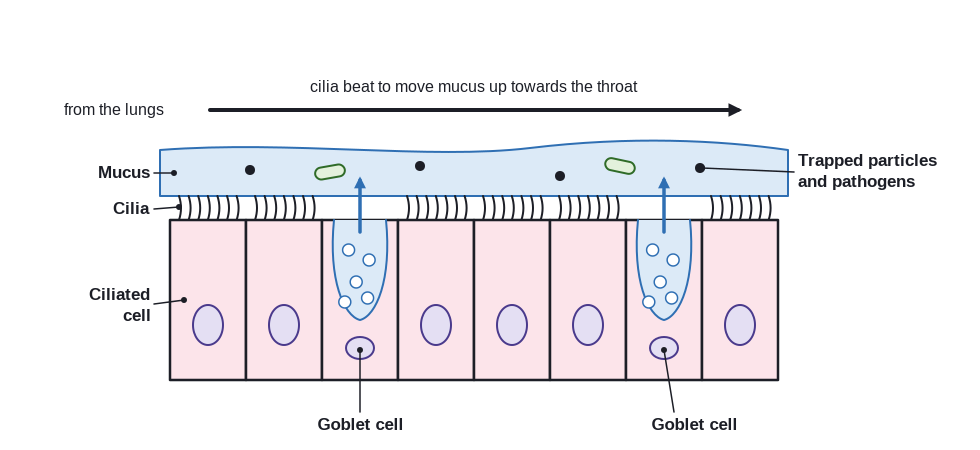
The body's first defences against pathogens are physical barriers and chemical defences. The skin is a barrier, mucus in the nose and airways traps pathogens, and cilia move the mucus away from the lungs. Lysozymes in tears break down the cell walls of bacteria, and hydrochloric acid in the stomach kills swallowed pathogens.
The body has first lines of defence that try to stop pathogens getting in or kill them before they can cause harm.
| Defence | Type | How it protects |
|---|---|---|
| Skin | Physical barrier | Forms a barrier that pathogens cannot easily pass through |
| Mucus | Physical barrier | A sticky liquid in the nose and airways that traps pathogens |
| Cilia | Physical barrier | Tiny hairs on the cells lining the airways that move the trapped mucus up and away from the lungs |
| Lysozymes | Chemical defence | Enzymes in tears and other secretions that break down the cell walls of bacteria |
| Hydrochloric acid | Chemical defence | Acid in the stomach that kills pathogens swallowed with food and drink |
 (opens full size in a new tab)
Common mistake:
Cilia do not trap pathogens; mucus does. Cilia move the mucus.
Written and checked against the Edexcel GCSE Biology (1BI0) specification · Updated October 2026