

Cycling of materialsSpec 9.12
Materials such as carbon, nitrogen and water are cycled through an ecosystem, moving between the abiotic components (air, water and soil) and the biotic components (living organisms).
Plants take up materials from the air, water and soil and build them into their own biomass. The materials pass to animals when they feed. Materials return to the soil and air when organisms excrete waste, and when dead organisms and their waste are broken down by decomposers. The materials can then be used again by new organisms. Cycling is needed because the supply of each material is limited.
The carbon cycleSpec 9.13
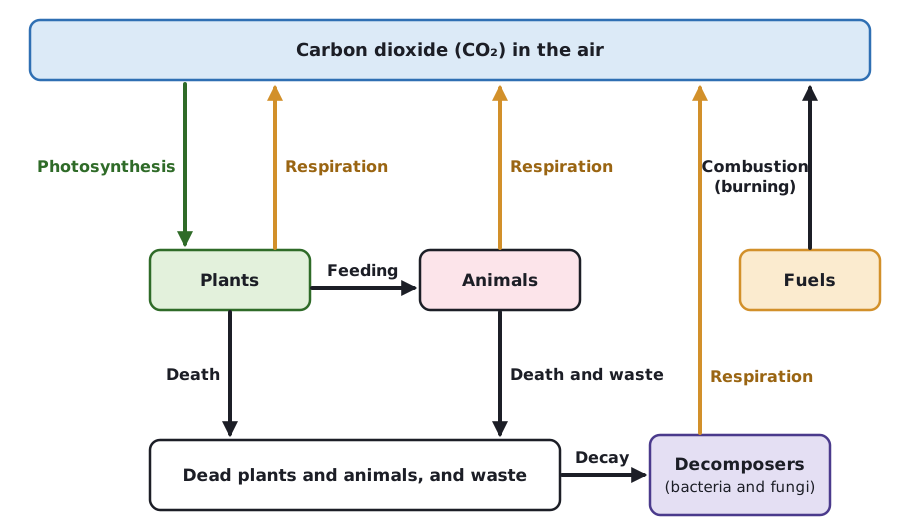
All living things are made of carbon compounds. The carbon cycle is important because it returns carbon to the atmosphere as carbon dioxide, so that it is available for plants to use in photosynthesis again.
- Plants and algae take carbon dioxide from the air and use it in photosynthesis to make carbon compounds such as glucose, starch and proteins.
- The carbon compounds pass along the food chain when animals feed.
- All organisms (plants, animals and decomposers) release carbon dioxide into the air by respiration.
- When plants and animals die, their bodies and waste are broken down by decomposers, which release carbon dioxide into the air by respiration.
- Burning of fuels (combustion) also releases carbon dioxide into the air.
The role of microorganisms as decomposers
Decomposers are microorganisms such as bacteria and fungi. They release enzymes to break down dead plants, dead animals and waste, and they respire, releasing carbon dioxide into the air. Without decomposers, dead material would pile up, carbon would be locked in it, and the supply of carbon dioxide for photosynthesis would run out. Decomposers also release mineral ions back into the soil.
 Tap to enlarge
The water cycle and potable waterSpec 9.14
All organisms need water to survive, and plants need it for photosynthesis. The water cycle is important because it keeps supplying fresh water to the land for plants, animals and humans. The main processes are:
- Evaporation: water from seas, lakes and soil changes to water vapour, using heat from the Sun.
- Transpiration: water vapour is lost from the leaves of plants.
- Condensation: water vapour cools and turns into liquid water droplets, forming clouds.
- Precipitation: water falls as rain, snow or hail, and then runs over the land or soaks into the soil and flows into rivers, lakes and the sea.
Potable water and desalination
Potable water is water that is safe to drink. In areas of drought there may not be enough fresh water. Sea water contains too much dissolved salt to drink, but desalination removes the salt to produce potable water.
- Distillation: sea water is evaporated, leaving the salt behind, and the water vapour is condensed back to pure water.
- Reverse osmosis: sea water is forced through a partially permeable membrane that lets water through but not salt.
Desalination needs large amounts of energy, so it is expensive.
The nitrogen cycleSpec 9.15
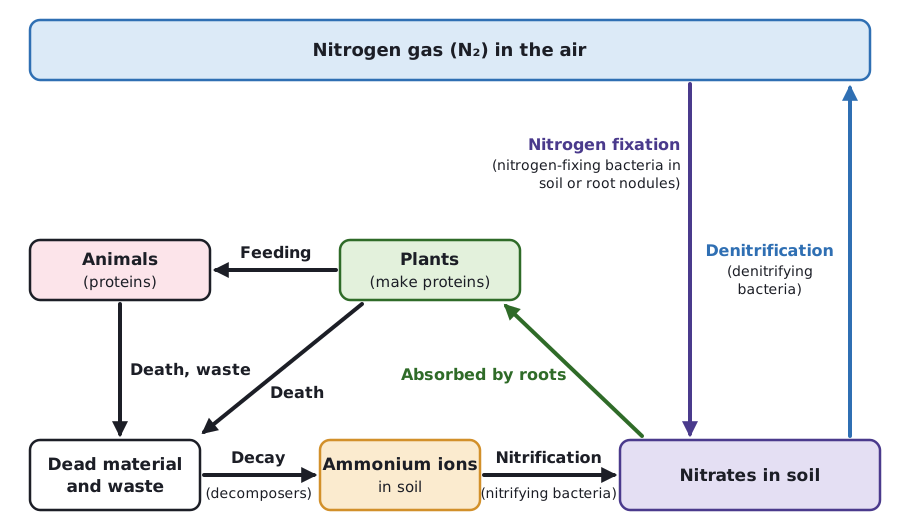
Plants need nitrates from the soil to make amino acids and proteins. Although 78% of air is nitrogen gas, plants cannot use it directly. Bacteria in the soil have key roles in making nitrates available.
| Process | Bacteria | What happens |
|---|---|---|
| Decay | Decomposers (bacteria and fungi) | Break down proteins and urea in dead material and waste into ammonia (ammonium ions) |
| Nitrification | Nitrifying bacteria | Convert ammonium ions in the soil into nitrates, which plants absorb |
| Nitrogen fixation | Nitrogen-fixing bacteria, in the soil or in root nodules of legumes | Convert nitrogen gas from the air into nitrogen compounds, which become nitrates |
| Denitrification | Denitrifying bacteria | Convert nitrates in the soil into nitrogen gas, which reduces soil fertility |
Plants take up nitrates and build them into proteins. Animals get the nitrogen by eating plants or other animals.
Fertilisers and crop rotation
Farmers remove crops, so nitrates are lost from the soil. They can replace them in two ways:
- Fertilisers: add nitrates (and other minerals) to the soil.
- Crop rotation: different crops are grown in a field in different years. In some years a legume crop such as clover or peas is grown. Its root nodules contain nitrogen-fixing bacteria, and when its remains are ploughed into the soil they add nitrates. It is then followed by a crop that needs a lot of nitrates.
 Tap to enlarge
Quick check
Which process removes carbon dioxide from the air?
Show answer
Photosynthesis.
What is potable water?
Show answer
Water that is safe to drink.
Why do plants need nitrates?
Show answer
To make amino acids and proteins.
Which bacteria are found in the root nodules of legumes?
Show answer
Nitrogen-fixing bacteria.
Why are decomposers important in the carbon cycle?
Show answer
They break down dead material and release carbon dioxide by respiration.