

How pathogens spread and how to control themSpec 5.6
To explain how to reduce the spread of a disease, first state how it is spread, then say how that route can be blocked.
| Disease | How it spreads | How spread can be reduced or prevented |
|---|---|---|
| Cholera (bacteria) | In water contaminated with sewage containing the bacteria | Provide clean drinking water; treat sewage; wash hands and cook food thoroughly |
| Tuberculosis (bacteria) | Airborne: droplets from coughs and sneezes | Isolate infected people; cover the mouth when coughing; good ventilation; vaccination |
| Chalara ash dieback (fungi) | Airborne spores carried by the wind | Destroy infected trees; restrict movement and import of ash plants |
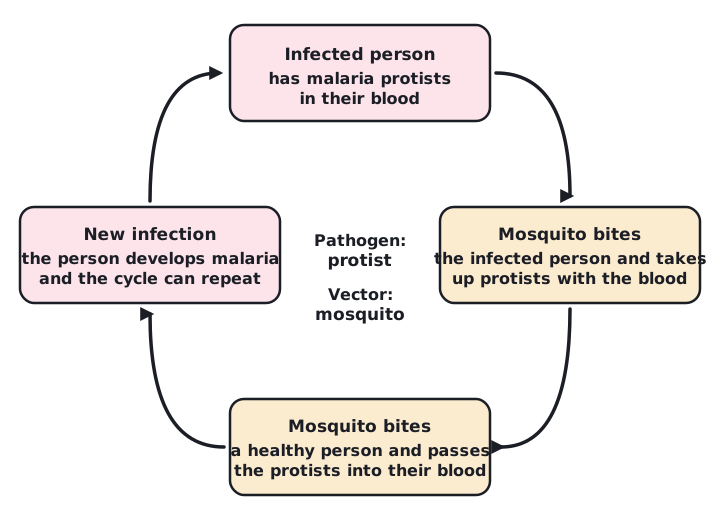
| Malaria (protists) | By an animal vector: the mosquito, which carries the protist from person to person | Control mosquitoes (drain standing water, use insecticides); mosquito nets; insect repellent |
Triple only
| Disease | How it spreads | How spread can be reduced or prevented |
|---|---|---|
| Stomach ulcers, Helicobacter (bacteria) | Oral transmission: swallowing the bacteria in food, water or from saliva | Good hygiene; handwashing; clean water and food preparation |
| Ebola (virus) | Contact with infected body fluids | Isolate patients; wear protective clothing; avoid contact with body fluids, including safe handling of bodies |
A vector is an organism that carries a pathogen from one host to another without usually being harmed itself. The malaria vector is the mosquito. Killing or avoiding the vector breaks the chain.
 Tap to enlarge