
ATP: the molecule that distributes energySpec C1.2.1, C1.2.2, C1.2.3
In short
ATP, adenosine triphosphate, is a nucleotide that distributes energy within cells. Hydrolysis of ATP to ADP and phosphate releases enough energy for many tasks, such as active transport, synthesis of macromolecules and movement of cells or chromosomes. Synthesising ATP from ADP and phosphate requires energy, which comes from cell respiration.
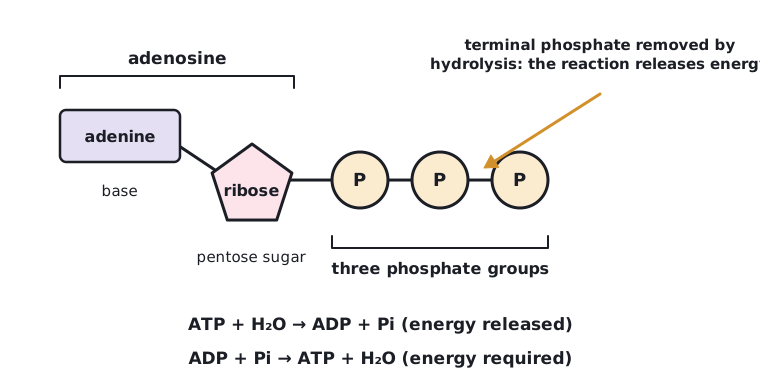
ATP (adenosine triphosphate) is the molecule that distributes energy within cells. It is a nucleotide, made of the base adenine, the pentose sugar ribose and a chain of three phosphate groups.
 (opens full size in a new tab)
Why ATP suits its role as energy currency
- It is soluble in water, so it moves easily to wherever energy is needed in the cell.
- It is stable at the pH of a cell and does not break down unless an enzyme catalyses it, so energy is not wasted.
- It cannot pass freely through membranes, so it stays inside the cell where it was made.
- Hydrolysis of one phosphate group releases an amount of energy that is sufficient for many tasks in the cell, without releasing so much that most is wasted as heat.
- It is rapidly regenerated from ADP and phosphate, so a small pool of ATP can be recycled many times.
Life processes that ATP supplies with energy
- Active transport across membranes, for example pumping ions against their concentration gradient.
- Synthesis of macromolecules (anabolism), such as proteins, DNA and glycogen.
- Movement: of the whole cell (for example muscle contraction, cilia and flagella) or of cell components such as chromosomes during cell division.
Interconversion of ATP and ADP
Energy is released by hydrolysis of ATP to ADP (adenosine diphosphate) and phosphate. Energy is required to synthesise ATP from ADP and phosphate. In cells this energy comes from cell respiration (and in photosynthetic cells also from light). Often the phosphate removed from ATP is transferred to another molecule, making it more reactive.
ATP does not store large amounts of energy long term; it distributes energy. Fats and carbohydrates are the energy stores.
Written and checked against the IB Biology SL specification · Updated October 2026