
Lipids: hydrophobic properties, triglycerides and phospholipidsSpec B1.1.8, B1.1.9
In short
Lipids are substances in living organisms that dissolve in non-polar solvents but are only sparingly soluble in aqueous solvents. They include fats, oils, waxes and steroids. A triglyceride forms by condensation of one glycerol with three fatty acids; a phospholipid forms when glycerol links to two fatty acids and one phosphate group.
- Lipids
- Substances in living organisms that dissolve in non-polar solvents but are only sparingly soluble in aqueous solvents. They include fats, oils, waxes and steroids.
Lipids are mostly hydrocarbon. C–H bonds share electrons almost equally, so they are non-polar and cannot form hydrogen bonds with water. This makes lipids hydrophobic: in water, lipid molecules cluster together instead of dissolving.
Formation by condensation
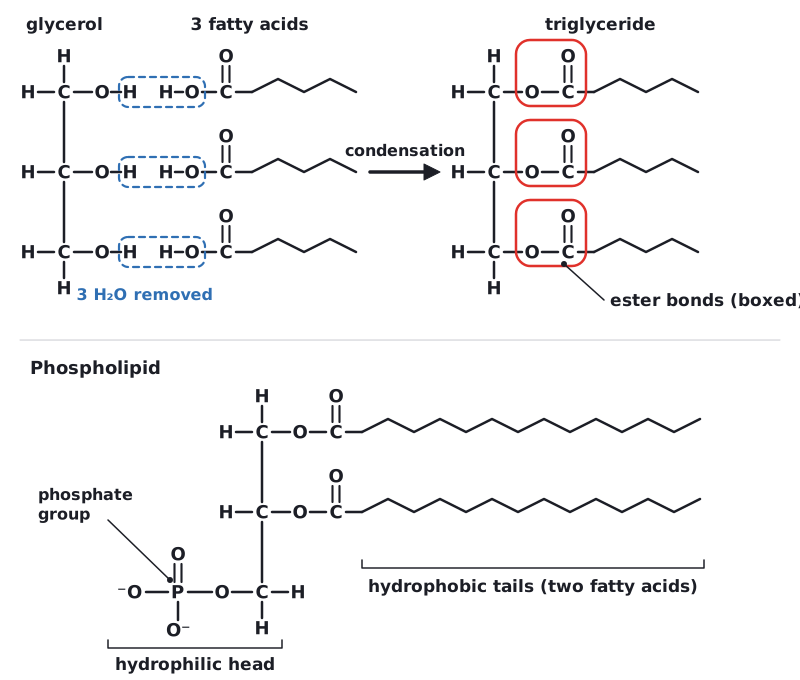
Glycerol has three –OH groups. Each can react with the carboxyl (–COOH) group of a fatty acid in a condensation reaction, forming an ester bond and releasing water.
| Feature | Triglyceride | Phospholipid |
|---|---|---|
| Made from | One glycerol + three fatty acids | One glycerol + two fatty acids + one phosphate group |
| Water released | Three molecules, one per ester bond | One per bond formed (three in all) |
| Polarity | Entirely hydrophobic | Hydrophilic phosphate head, hydrophobic tails |
| Main role | Energy storage and insulation | Membranes |
 (opens full size in a new tab)
A triglyceride is not a polymer: glycerol and fatty acids are not repeating identical monomers. It is still made by condensation and broken down by hydrolysis.
Written and checked against the IB Biology SL specification · Updated October 2026