
Energy losses between trophic levelsSpec C4.2.12, C4.2.13, C4.2.14
In short
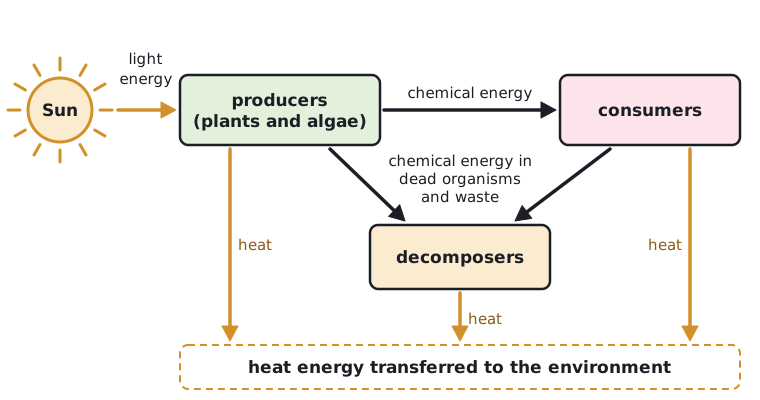
Energy availability falls at each successive stage in a food chain because large amounts of energy are lost between trophic levels. Not all of an organism is eaten, not all that is eaten is digested, and much energy is converted to heat in cell respiration. These losses restrict ecosystems to a small number of trophic levels.
Causes of energy loss
- Not all of the organisms at one level are eaten: some die and parts such as roots, bones or shells are left uneaten.
- Not all of the food eaten is digested and absorbed: undigested material such as cellulose is egested as faeces.
- Much of the absorbed energy is used in cell respiration and is converted to heat.
- Some energy is lost in excretory waste such as urea.
Uneaten parts, dead organisms and faeces pass to decomposers and detritus feeders. These are not usually placed in food chains, but they transform the energy in this dead matter too, finally releasing it as heat.
Heat from cell respiration
Energy transfers in cells are never 100% efficient. Heat is produced both when ATP is produced in cell respiration (not all the energy in glucose is captured in ATP) and when ATP is used in cells, for example in muscle contraction or active transport. This applies to autotrophs and heterotrophs alike. Heat is lost to the environment and cannot be converted back to chemical energy by organisms, so energy cannot be recycled; it must be replaced continually by sunlight.
 (opens full size in a new tab)
Limits on food chain length
Typically only around 10% of the energy at one trophic level reaches the next (it varies widely). After four or five transfers there is too little energy left to support another population. At each successive stage there are fewer organisms or smaller organisms, so there is less biomass, but the energy content per unit mass is not reduced: a gram of fox tissue holds about as much energy as a gram of hare tissue.
Linking question: how does the transformation of energy from one form to another make biological processes possible? Light → chemical energy → ATP → work and heat is the chain to describe.
Written and checked against the IB Biology SL specification · Updated October 2026