
Ovarian and uterine cycles and their hormonesSpec D3.1.5
In short
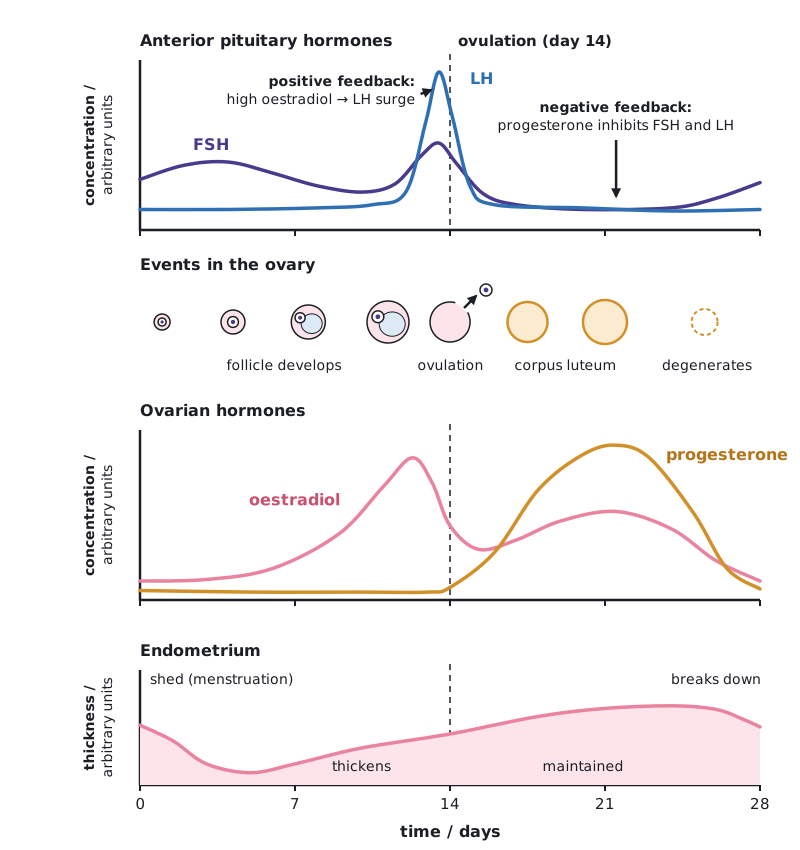
The menstrual cycle is the ovarian and uterine cycles together, controlled by FSH and LH from the pituitary and oestradiol and progesterone from the ovary. FSH stimulates follicle growth; rising oestradiol thickens the endometrium and, by positive feedback, causes the LH surge that triggers ovulation. Progesterone from the corpus luteum maintains the endometrium and inhibits FSH and LH.
The ovarian cycle (follicle growth, ovulation, corpus luteum) and the uterine cycle (endometrium builds up, is maintained, then breaks down) together make the menstrual cycle, roughly 28 days long.
| Hormone | Secreted by | Main effects |
|---|---|---|
| FSH (follicle-stimulating hormone) | Anterior pituitary | Stimulates development of follicles; stimulates follicle cells to secrete oestradiol |
| LH (luteinizing hormone) | Anterior pituitary | Surge triggers ovulation; stimulates the empty follicle to become the corpus luteum |
| Oestradiol | Follicle cells in the ovary | Thickens the endometrium; low levels inhibit FSH and LH; high levels stimulate the LH and FSH surge |
| Progesterone | Corpus luteum | Maintains and further thickens the endometrium; inhibits FSH and LH secretion |
- Days 1–5: the endometrium is shed (menstruation). Progesterone and oestradiol are low, so FSH secretion rises.
- FSH stimulates several follicles to develop; usually one matures. Its cells secrete increasing amounts of oestradiol.
- Oestradiol stimulates the endometrium to thicken again. At first it inhibits FSH (negative feedback).
- By about day 12–13 oestradiol is high. High oestradiol stimulates the pituitary to release much more LH and FSH: positive feedback causes the LH surge.
- The LH surge triggers ovulation at about day 14: the mature follicle releases a secondary oocyte into the oviduct.
- LH stimulates the empty follicle to develop into the corpus luteum, which secretes progesterone (and some oestradiol).
- Progesterone maintains the thick endometrium and, with oestradiol, inhibits FSH and LH (negative feedback), so no new follicles develop.
- If there is no pregnancy, the corpus luteum degenerates after about 10–12 days. Progesterone falls, the endometrium breaks down (menstruation) and FSH rises again: the cycle repeats.
 (opens full size in a new tab)
Oestradiol has both effects: low to moderate levels inhibit FSH and LH, but sustained high levels before ovulation stimulate the LH surge. Say which level you mean.
Written and checked against the IB Biology SL specification · Updated October 2026