
Nutrient upwelling and threats to coral reefsSpec D4.3.5, D4.3.7
In short
Changes in ocean currents alter the timing and extent of nutrient upwelling: warmer surface water can prevent nutrients rising, decreasing ocean primary production and energy flow through food chains. Coral reefs are threatened with ecosystem collapse because increased carbon dioxide causes ocean acidification and suppresses calcification, and higher water temperatures cause coral bleaching.
Nutrient upwelling
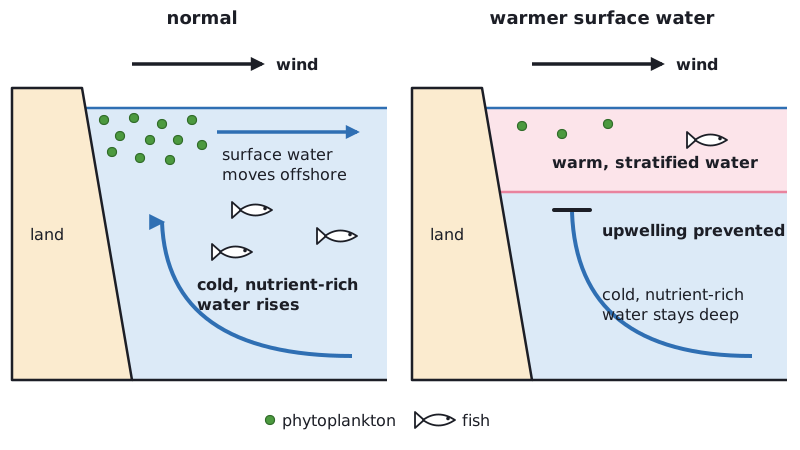
In upwelling zones, currents bring cold, nutrient-rich water from the deep ocean to the sunlit surface, where phytoplankton use the nitrate and phosphate for growth. These zones support some of the most productive fisheries.
Warmer surface water is less dense and forms a stable layer that does not mix with the cold water below. This can prevent nutrient upwelling to the surface. Ocean primary production decreases, so less energy flows through marine food chains to fish, seabirds and marine mammals. Changes in currents also alter the timing of upwelling, so it may not match the breeding seasons of consumers.
 (opens full size in a new tab)
Threats to coral reefs
- Ocean acidification: increased CO₂ dissolves in seawater, forming carbonic acid. The pH falls and fewer carbonate ions are available, which suppresses calcification, so corals build calcium carbonate skeletons more slowly.
- Coral bleaching: increases in water temperature cause corals to expel their symbiotic algae (zooxanthellae). The corals turn white and lose their main source of food; if high temperatures last, they die.
Corals build the reef structure that provides habitat and food for very many species. Loss of corals causes the collapse of reef ecosystems, so coral reefs are an example of potential ecosystem collapse.
Written and checked against the IB Biology SL specification · Updated October 2026