
Sexual reproduction in flowering plants and insect-pollinated flowersSpec D3.1.8, D3.1.9
In short
Reproduction in flowering plants is sexual: male gametes are produced inside pollen grains and female gametes inside ovules. Pollination transfers pollen from an anther to a stigma; a pollen tube then grows down the style to an ovule, where a male gamete fuses with the egg cell to produce a zygote that develops into an embryo.
Flowering plants reproduce sexually, even when one plant (a hermaphrodite) has both male and female parts, because haploid gametes still fuse at fertilization.
- Gamete production: male gametes form inside pollen grains made in the anthers; the female gamete (egg cell) forms inside each ovule in the ovary.
- Pollination: pollen is transferred from an anther to a stigma, by animals or wind.
- Pollen development: the pollen grain absorbs water and sugar on the stigma and germinates. A pollen tube grows down through the style to the ovary, carrying the male gametes.
- Fertilization: the tube enters an ovule through the micropyle and a male gamete nucleus fuses with the egg cell nucleus, giving a diploid zygote.
- The zygote divides by mitosis to form an embryo. The ovule becomes a seed and the ovary develops into a fruit.
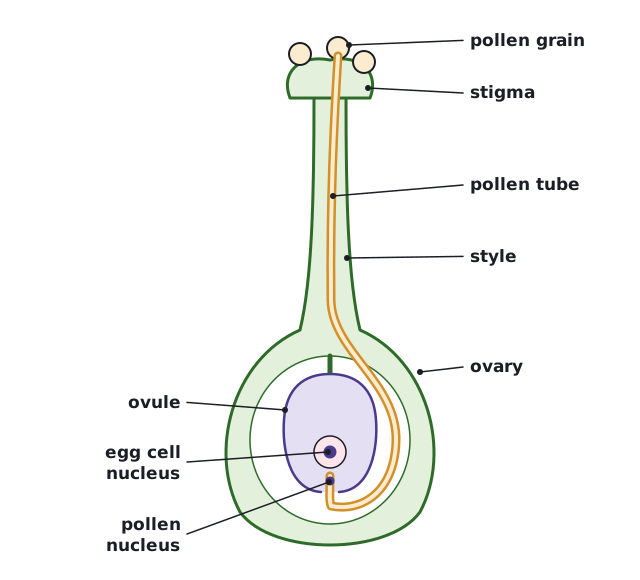 (opens full size in a new tab)
Features of an insect-pollinated flower
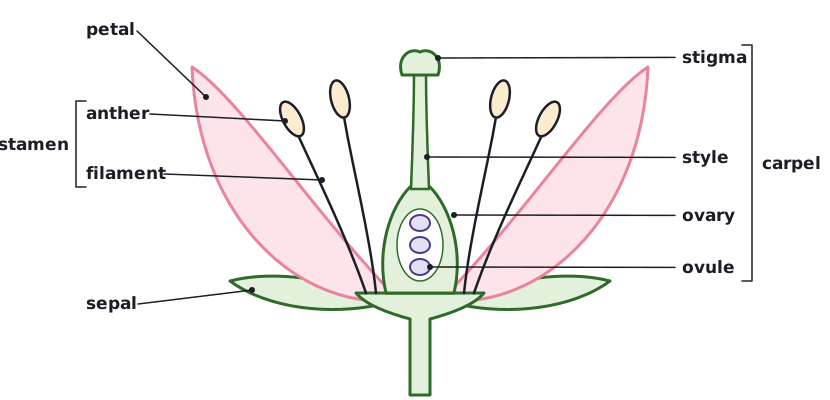 (opens full size in a new tab)
| Structure | Function |
|---|---|
| Petal | Large, brightly coloured and often scented to attract insects |
| Nectary | Secretes nectar, a sugary reward for insect visitors |
| Anther | Produces pollen; placed where a visiting insect brushes against it |
| Filament | Stalk holding the anther in position |
| Stigma | Sticky surface that receives pollen from an insect |
| Style | Holds the stigma up; the pollen tube grows through it |
| Ovary | Contains the ovules; becomes the fruit |
| Ovule | Contains the female gamete; becomes the seed |
| Sepal | Protects the flower while it is a bud |
Exam tip:
Annotated diagrams score for function, not just names: write what each structure does next to its label, as in the table.
Written and checked against the IB Biology SL specification · Updated October 2026