
Food chains, food webs and decomposersSpec C4.2.3, C4.2.4, C4.2.5
In short
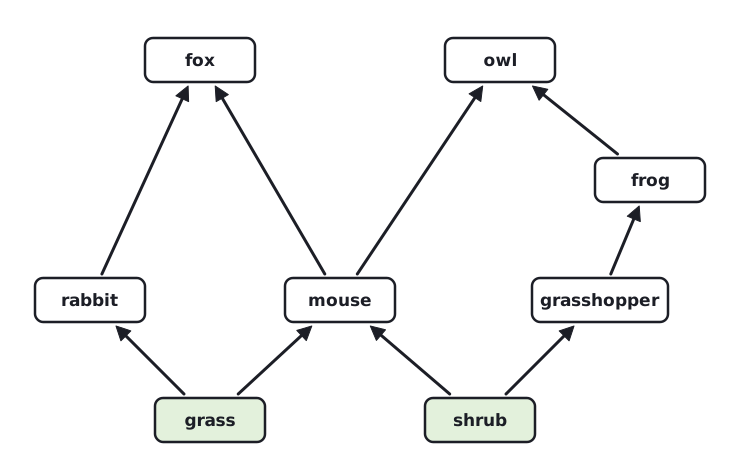
Chemical energy flows through food chains as each consumer feeds on the organism at the previous stage. Food chains and food webs represent feeding relationships in a community, with arrows showing the direction of transfer of energy and biomass. Decomposers obtain their energy from carbon compounds in dead organic matter: faeces, dead parts of organisms and dead whole organisms.
Energy enters a food chain as light and is stored as chemical energy in carbon compounds made by producers. When a consumer eats an organism from the previous stage, it takes in those carbon compounds and the chemical energy in them.
Constructing food chains and webs
- Start with a producer on the left (or bottom).
- Arrows point from the organism eaten to the organism that eats it: they show the direction of transfer of energy and biomass, not 'is eaten by' in reverse.
- A food web links many food chains, because most consumers eat, and are eaten by, more than one species.
Example from an Arabian desert community: grasses and shrubs → Cape hare → Arabian red fox. The fox also eats jirds (desert rodents) and beetles, so several food chains link together into a food web.
 (opens full size in a new tab)
Decomposers
Not all organic matter is eaten. Decomposers (saprotrophic bacteria and fungi) obtain energy from carbon compounds in dead organic matter: faeces, dead parts of organisms (fallen leaves, shed skin, hair, feathers) and dead whole organisms. Detritivores such as earthworms feed on the same material. In doing so they release the last of the chemical energy as heat and return mineral ions to the soil.
Arrows that point from the predator to the prey reverse the direction of energy flow and lose the mark.
Written and checked against the IB Biology SL specification · Updated October 2026