
Mitosis, meiosis and chromosome movementSpec D2.1.4, D2.1.5, D2.1.6
In short
Mitosis is nuclear division that keeps the chromosome number and genome the same, while meiosis halves the chromosome number and generates genetic diversity. Both need DNA replication first, so each chromosome is two chromatids. In both, histones supercoil DNA to condense chromosomes, and microtubules with motor proteins move them.
The nucleus must divide before the cell divides. Otherwise one daughter cell would have no nucleus (an anucleate cell), and it could not make new proteins or divide again. Eukaryotes use two types of nuclear division.
| Mitosis | Meiosis | |
|---|---|---|
| Chromosome number | Maintained: daughter nuclei have the same number as the parent | Halved: diploid to haploid |
| Genome of daughter nuclei | Identical to each other and to the parent | Genetically different from each other and from the parent |
| Number of nuclei produced | Two | Four |
| Used for | Growth, cell replacement, tissue repair, asexual reproduction | Producing gametes (or spores) for sexual reproduction |
DNA replication comes first
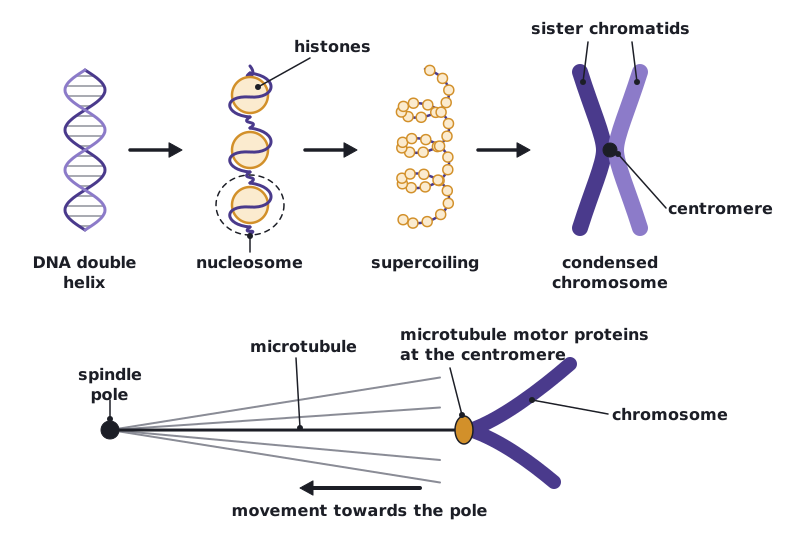
DNA replication is a prerequisite for both mitosis and meiosis. It happens before division begins. After replication, each chromosome consists of two elongated DNA molecules called sister chromatids, which are genetically identical and held together at the centromere until anaphase.
Condensation and movement of chromosomes
Two features are shared by mitosis and meiosis. First, chromosomes condense. Each DNA molecule is wrapped around histone proteins to form nucleosomes, and the chain of nucleosomes is coiled again and again (supercoiling). This makes chromosomes short and thick, so they can be moved without tangling or breaking.
Second, chromosomes are moved by the spindle. The spindle is made of microtubules that attach to the centromere of each chromosome. Microtubule motor proteins at the attachment point, together with shortening of the microtubules, pull chromosomes or chromatids towards the poles.
 (opens full size in a new tab)
Do not draw or describe a replicated chromosome as two chromosomes. It is one chromosome made of two chromatids until the chromatids separate in anaphase.
Written and checked against the IB Biology SL specification · Updated October 2026