
ThermoregulationSpec D3.3.5, D3.3.6
In short
Thermoregulation is the control of body temperature by negative feedback. Peripheral thermoreceptors send information to the hypothalamus, which controls effectors directly by nerves and through the pituitary gland and thyroxin. When cold, vasoconstriction, shivering, hair erection and uncoupled respiration in brown adipose tissue conserve or generate heat; when hot, vasodilation and sweating increase heat loss.
Birds and mammals keep a constant body temperature by both physiological and behavioural means (for example seeking shade, huddling, or in humans putting on clothes). The details below are for humans.
The feedback loop
- Receptors: peripheral thermoreceptors in the skin detect skin temperature; thermoreceptors in the hypothalamus detect blood (core) temperature.
- Control centre: the hypothalamus compares temperature with the set point (about 37 °C) and sends nerve impulses to effectors.
- Hormonal route: when cold, the hypothalamus stimulates the pituitary gland to secrete TSH, which stimulates the thyroid gland to secrete thyroxin. Thyroxin raises the basal metabolic rate, so cells generate more heat.
- Effectors: skeletal muscle, brown adipose tissue, skin arterioles, sweat glands and hair erector muscles.
| Mechanism | When | How it works |
|---|---|---|
| Vasoconstriction | Too cold | Arterioles supplying skin capillaries narrow, so less blood flows near the surface and less heat is lost |
| Shivering | Too cold | Rapid involuntary contractions of skeletal muscle; respiration releases heat |
| Uncoupled respiration in brown adipose tissue | Too cold | Brown fat cells have many mitochondria with a protein (thermogenin) that lets protons leak back across the inner membrane, so energy is released as heat instead of making ATP |
| Hair erection | Too cold | Hair erector muscles raise body hairs, trapping a layer of air; much less effective in humans than in furry mammals |
| Vasodilation | Too hot | Arterioles supplying skin capillaries widen, so more blood flows near the surface and more heat is lost by radiation |
| Sweating | Too hot | Sweat glands secrete sweat; evaporation of water from the skin removes heat |
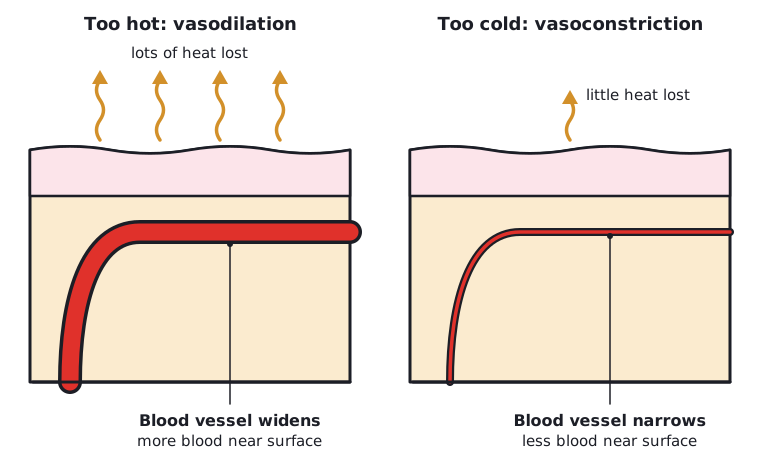 (opens full size in a new tab)
Capillaries do not move up or down in the skin, and they cannot constrict. It is the arterioles supplying them that dilate or constrict.
Linking question: what biological systems are sensitive to temperature changes? Enzyme activity, membrane fluidity and nerve conduction all change with temperature.
Quick check
Name four homeostatic variables in humans.
Show answer
Body temperature, blood pH, blood glucose concentration and blood osmotic concentration.
Which pancreatic cells secrete glucagon?
Show answer
α (alpha) cells of the islets of Langerhans.
State the physiological cause of type 1 diabetes.
Show answer
Autoimmune destruction of the β cells, so little or no insulin is secreted.
How does brown adipose tissue generate heat?
Show answer
Uncoupled respiration: energy is released as heat instead of being used to make ATP.
Written and checked against the IB Biology SL specification · Updated October 2026