
Structure and adaptations of arteries and veinsSpec B3.2.2, B3.2.3, B3.2.5
In short
Arteries carry blood away from the heart at high pressure and have thick walls of smooth muscle and elastic tissue relative to a narrow lumen. Veins return blood to the heart at low pressure and have thin, flexible walls, a wide lumen and valves that prevent backflow, while surrounding muscles squeeze blood towards the heart.
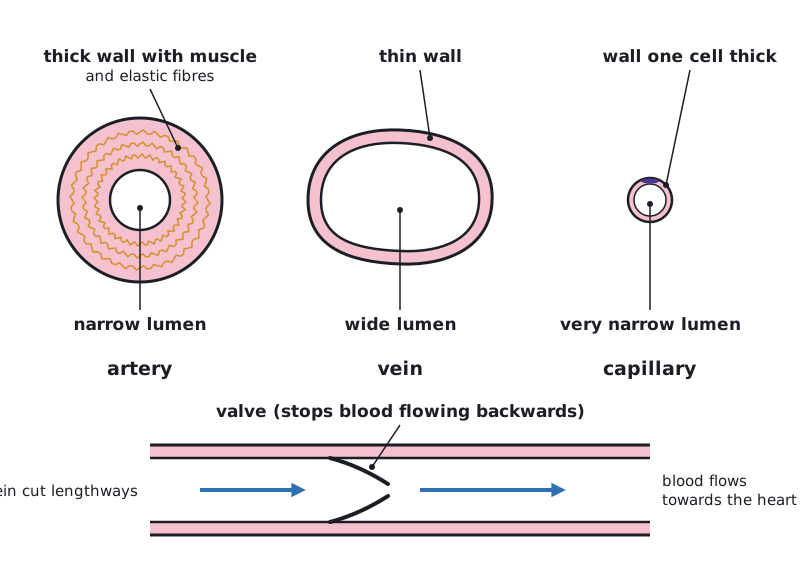 (opens full size in a new tab)
| Feature | Artery | Vein |
|---|---|---|
| Wall thickness relative to lumen | Thick wall, narrow lumen | Thin wall, wide lumen |
| Tunica media (smooth muscle and elastic fibres) | Thick layer | Thin layer |
| Shape in a micrograph | Round, with a folded inner lining | Often flattened or irregular |
| Valves | None along their length | Present |
| Blood pressure | High, pulsing | Low, steady |
Practical skill:
To identify a vessel in a micrograph, compare the thickness of the wall with the diameter of the lumen. In an artery the wall is thick relative to a narrow, round lumen; in a vein the wall is much thinner than the width of its wide, often flattened lumen.
Adaptations of arteries
- Elastic fibres stretch when the ventricles pump blood in, then recoil between beats. The recoil pushes blood on and keeps the pressure up, so flow is less pulsing further from the heart.
- A thick layer of smooth muscle can contract to narrow the lumen, helping to maintain blood pressure.
- The thick wall, with a tough outer layer of collagen fibres, withstands high pressure without bursting.
- The narrow lumen helps maintain high pressure.
Adaptations of veins
- Pressure in veins is too low to push blood back to the heart unaided.
- Pocket valves close if blood starts to flow backwards, so blood moves only towards the heart.
- The thin, flexible wall is compressed when nearby skeletal muscles contract, squeezing blood towards the heart.
- A wide lumen offers little resistance to flow.
Written and checked against the IB Biology SL specification · Updated October 2026