
Seed dispersal and germinationSpec D3.1.12
In short
Seed dispersal is the movement of seeds away from the parent plant, whereas pollination is the transfer of pollen from anther to stigma before fertilization. Dispersal reduces competition and colonises new areas. During germination the seed absorbs water, the embryo grows, and stored starch, proteins and lipids are mobilized by enzymes to supply the growing embryo.
| Pollination | Seed dispersal | |
|---|---|---|
| What moves | Pollen (containing male gametes) | Seeds (containing embryos), often inside fruits |
| From and to | Anther to stigma | Parent plant to a new site away from it |
| When | Before fertilization | After fertilization, once seeds are mature |
| Purpose | Allows fertilization | Reduces competition with the parent and siblings; spreads the species to new areas |
- Wind: light seeds or fruits with wings or parachutes (sycamore, dandelion).
- Animals: fleshy fruits eaten and seeds passed out in faeces; hooked fruits that catch on fur.
- Water: buoyant fruits such as coconuts.
- Explosive: pods that dry and burst, flinging seeds (peas and other legumes).
Germination
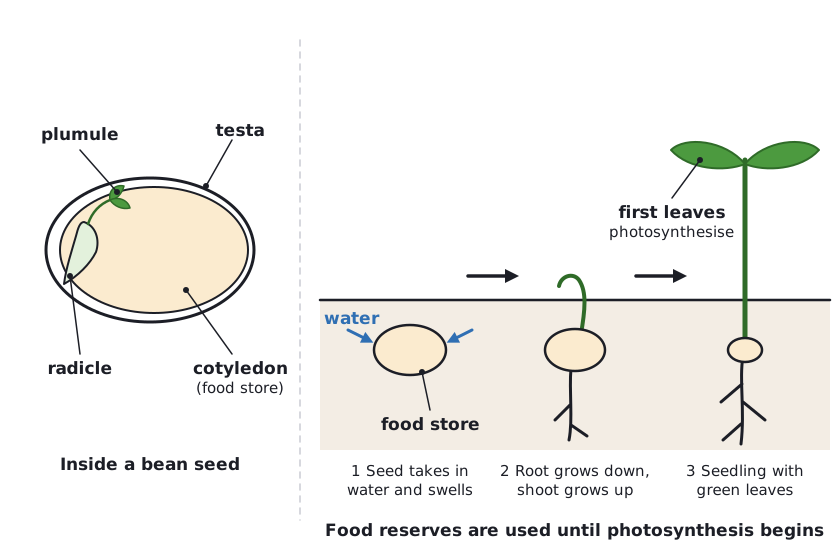
A seed contains an embryo (radicle, plumule and cotyledons) and food reserves, inside a protective testa. Germination needs water, oxygen and a suitable temperature.
- The seed absorbs water, so it swells, the testa splits and enzymes are activated.
- The embryo produces the plant growth regulator gibberellin (gibberellic acid), which stimulates production of hydrolytic enzymes such as amylase. This is best understood in cereal grains, where the enzymes are made in the aleurone layer around the food store.
- Food reserves are mobilized: amylase digests starch into maltose and sugars, proteases digest proteins into amino acids, and lipases digest lipids.
- These soluble products are transported to the growing regions of the embryo for aerobic respiration and growth.
- The radicle grows out first and becomes the root; the plumule grows up into the shoot. Once leaves open and photosynthesise, the seedling no longer depends on its reserves.
 (opens full size in a new tab)
Do not mix up dispersal and pollination: pollination moves pollen before fertilization; dispersal moves seeds after it.
Quick check
State one advantage of asexual reproduction.
Show answer
Offspring are genetically identical to a parent that is already adapted to the existing environment.
Which hormone surge triggers ovulation, and what causes it?
Show answer
An LH surge, caused by positive feedback from high oestradiol levels.
What happens to the sperm's tail and mitochondria at fertilization?
Show answer
They are destroyed; only the sperm nucleus contributes.
What is the function of the stigma?
Show answer
A sticky surface that receives pollen.
Written and checked against the IB Biology SL specification · Updated October 2026