
Skin, mucous membranes and blood clottingSpec C3.2.2, C3.2.3
In short
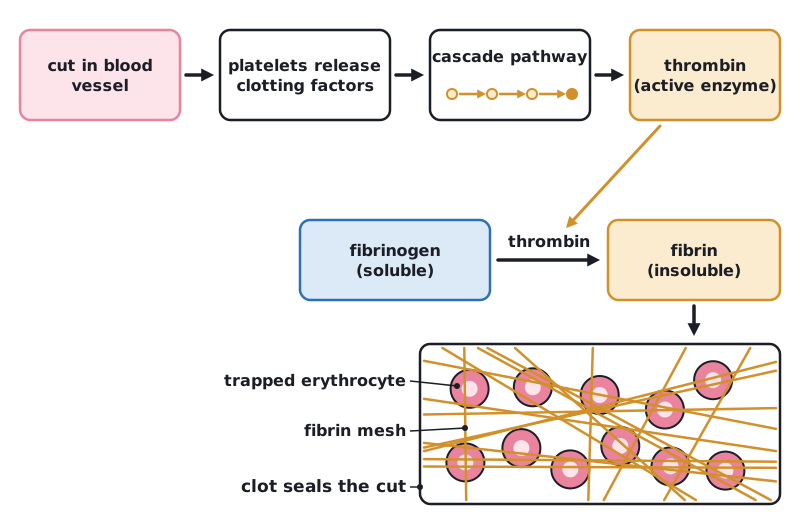
Skin and mucous membranes are the primary defence against pathogens. The skin acts as both a physical and a chemical barrier, and mucous membranes trap pathogens in sticky mucus. Cuts are sealed by blood clotting: platelets release clotting factors that start a cascade, ending with thrombin rapidly converting fibrinogen into fibrin, which traps erythrocytes to form a clot.
Primary defence
The primary defence stops pathogens entering the body in the first place.
- Skin as a physical barrier: the outer layer is made of tough, dead cells packed with keratin, which pathogens cannot easily penetrate. Dead cells are constantly shed, taking microorganisms with them.
- Skin as a chemical barrier: secretions from sebaceous and sweat glands contain fatty acids and lactic acid, making the skin surface acidic, and contain antimicrobial chemicals that inhibit the growth of many bacteria and fungi.
- Mucous membranes line the airways, gut, urinary and reproductive tracts. They are thinner than skin but secrete sticky mucus that traps pathogens. In the airways, cilia sweep mucus up to the throat to be swallowed. Mucus, tears and saliva contain lysozyme, an enzyme that digests bacterial cell walls.
Sealing of cuts by blood clotting
A cut in the skin breaks the primary barrier, so it must be sealed quickly. Blood clotting does this.
- Platelets at the site of the cut release clotting factors.
- The clotting factors start a cascade pathway: a series of reactions, each activating the next, which amplifies the signal.
- The cascade produces active thrombin, an enzyme.
- Thrombin rapidly converts soluble fibrinogen (a plasma protein) into insoluble fibrin.
- Fibrin forms a mesh of fibres that traps erythrocytes, forming a clot that seals the cut.
 (opens full size in a new tab)
Students are not required to draw or label diagrams of skin, and no further clotting details beyond platelets, clotting factors, the cascade, thrombin, fibrinogen, fibrin and trapped erythrocytes are required.
Written and checked against the IB Biology SL specification · Updated October 2026