
Effect of pH and temperature on protein structureSpec B1.2.5
In short
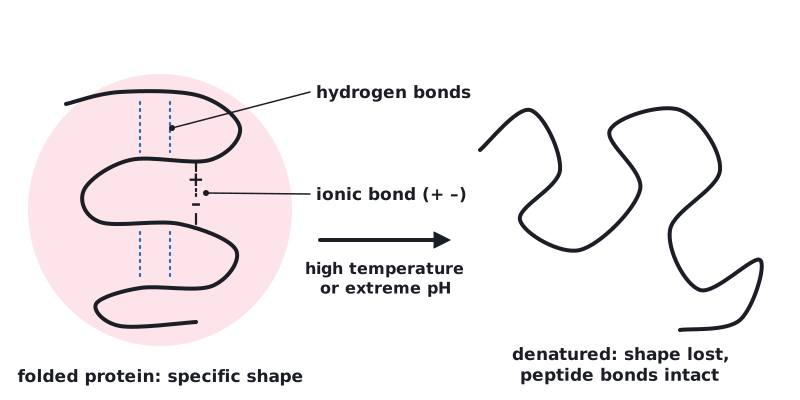
Denaturation is a change in the three-dimensional structure of a protein that is usually permanent, so the protein can no longer carry out its function. High temperatures make the molecule vibrate until weak bonds holding its shape break. Extremes of pH change the charges on R-groups, breaking ionic and hydrogen bonds. Peptide bonds are not broken.
A protein's function depends on its precise three-dimensional shape. That shape is held by bonds between parts of the chain, mostly weak ones such as hydrogen bonds and ionic bonds.
- Denaturation
- A change to the three-dimensional structure (conformation) of a protein so that it can no longer carry out its function. It is usually permanent.
Temperature
Heat makes the atoms in a protein vibrate more. Above a certain temperature, the vibrations break the hydrogen bonds and other weak interactions that hold the shape, and the protein unfolds. The temperature at which this happens varies: proteins from organisms living in hot springs stay stable at temperatures that denature most human proteins.
pH
Some R-groups contain amine or carboxyl groups that can gain or lose hydrogen ions. A change in pH changes the charges on R-groups, so ionic bonds between them break and new attractions or repulsions form. Each protein is stable over a particular pH range: for example, pepsin works in the acidic stomach while most cytoplasmic proteins need a pH near 7.
- Peptide bonds are not broken, so the amino acid sequence stays the same.
- Soluble proteins often become insoluble when denatured, for example egg white turning solid when heated.
- An enzyme that is denatured loses the shape of its active site, so it can no longer bind its substrate.
 (opens full size in a new tab)
When testing the effect of temperature or pH on a protein such as an enzyme, change one independent variable, keep substrate concentration, volume and time constant, and repeat each condition at least three times.
Linking question: how do abiotic factors influence the form of molecules? Temperature and pH are abiotic factors that change protein shape, which limits where organisms can live.
Quick check
Which four groups are bonded to the alpha carbon of an amino acid?
Show answer
An amine group, a carboxyl group, a hydrogen atom and an R-group.
What is an essential amino acid?
Show answer
One that cannot be synthesised by the body and must be obtained from food.
What is denaturation?
Show answer
A usually permanent change in the three-dimensional structure of a protein, so it can no longer carry out its function.
Written and checked against the IB Biology SL specification · Updated October 2026