
Differentiation and stem cellsSpec B2.3.1–B2.3.4
In short
Stem cells are cells that can divide endlessly and differentiate along different pathways. After fertilization, the zygote divides to form unspecialized cells, which differentiate as gradients of signal molecules switch on different genes. Early embryo cells are totipotent, then pluripotent; adult stem cells in niches such as bone marrow and hair follicles are multipotent.
From zygote to specialized cells
Fertilization produces a zygote, which divides by mitosis to form an embryo of unspecialized cells. These cells then develop into specialized cells by differentiation: each cell type expresses a different set of genes, so it makes different proteins and develops a different structure and function. All the cells still contain the same genes.
In an early-stage embryo, certain cells release signal molecules (morphogens). These diffuse away from their source, forming a concentration gradient across the embryo. The concentration a cell receives depends on its position, and this determines which genes it expresses. Cells in different positions therefore follow different developmental pathways, which is how body axes such as head-to-tail are set up.
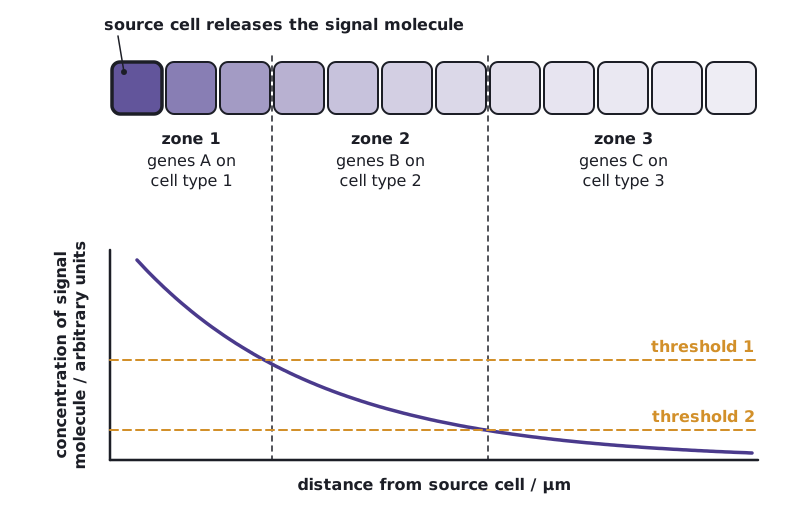 (opens full size in a new tab)
Properties of stem cells
Stem cells have two properties: they can divide endlessly, and they can differentiate along different pathways to become different cell types.
Stem cell niches in adult humans
A stem cell niche is a location in the body where stem cells are found. Conditions in the niche can either maintain the stem cells or promote their proliferation and differentiation, depending on the body's needs.
| Niche | Stem cells | Function |
|---|---|---|
| Bone marrow | Blood-forming (haematopoietic) stem cells | Produce red blood cells, white blood cells and platelets throughout life |
| Hair follicles | Stem cells in a region of the follicle called the bulge | Regenerate the hair follicle in each growth cycle and help repair the skin after wounding |
Totipotent, pluripotent and multipotent stem cells
| Type | Can form | Example |
|---|---|---|
| Totipotent | Any type of cell, including the placenta and other tissues outside the embryo; can form a whole organism | The zygote and cells of the very early embryo |
| Pluripotent | Any type of cell in the body, but not a whole organism | Embryonic stem cells, from the embryo a few days after fertilization |
| Multipotent | A limited range of related cell types | Adult stem cells, such as those in bone marrow, which form the different types of blood cell |
Differentiated cells do not lose genes. Differentiation changes which genes are expressed, not which genes are present.
Written and checked against the IB Biology SL specification · Updated October 2026