
Adaptations of plant form for harvesting lightSpec B4.2.11
In short
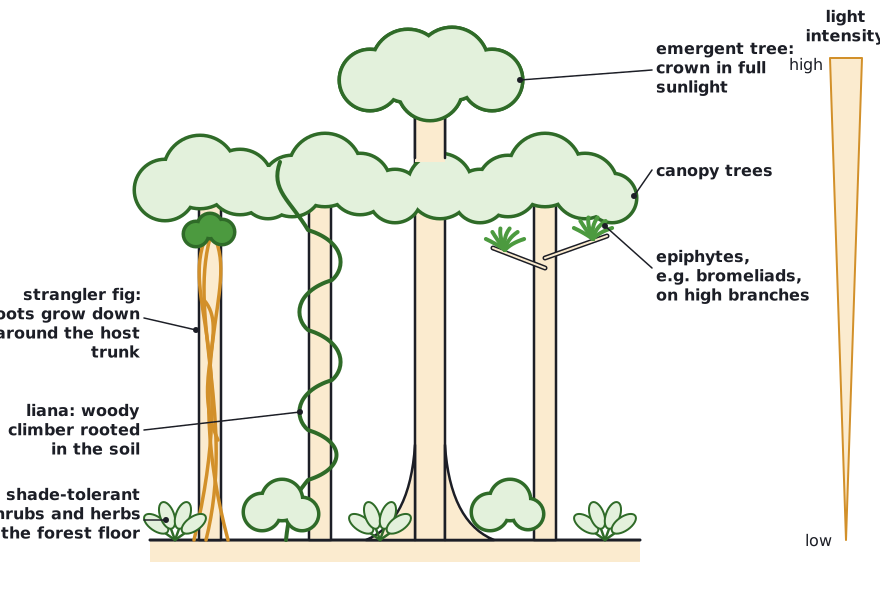
Plants in forests compete for light and use different strategies to reach it. Canopy trees grow tall trunks, lianas climb other trees, epiphytes grow on high branches, strangler epiphytes grow down from branches and enclose their host, and shade-tolerant shrubs and herbs photosynthesise efficiently in the dim light of the forest floor.
Light is the main resource plants compete for in a forest. Very little light reaches the forest floor, so each plant growth form has its own strategy to reach light sources.
| Plant form | Strategy |
|---|---|
| Trees that reach the canopy | Invest in a tall, woody trunk to lift leaves above competitors into full sunlight |
| Lianas | Woody climbers rooted in the soil that use other trees for support, reaching the canopy without building a thick trunk |
| Epiphytes | Grow on the branches of trees, high up where light is brighter, with no roots in the soil; they obtain water from rain and humid air |
| Strangler epiphytes | Start as epiphytes on a branch, then send roots down to the soil; the roots thicken and enclose the host tree, which may die (e.g. strangler figs, Ficus) |
| Shade-tolerant shrubs and herbs | Grow on the forest floor; large, thin leaves with a high chlorophyll content for their mass, and low respiration rates giving a low light compensation point, let them photosynthesise in dim light |
 (opens full size in a new tab)
Common mistake:
Epiphytes are not parasites. They grow on trees for support and light but take no nutrients from the host.
Written and checked against the IB Biology SL specification · Updated October 2026