
Immunity, vaccines and herd immunitySpec C3.2.10, C3.2.16, C3.2.17
In short
Immunity is the ability to eliminate an infectious disease from the body, due to the long-term survival of memory cells that can make the specific antibodies needed. Vaccines contain antigens, or DNA or RNA coding for antigens, and stimulate immunity to a specific pathogen without causing the disease. If enough of a population is immune, herd immunity greatly impedes transmission.
Immunity and memory cells
Immunity is the ability to eliminate an infectious disease from the body. It is due to the long-term survival of lymphocytes capable of making the specific antibodies needed to fight the infection: these are memory cells. On a second infection by the same pathogen, memory cells are activated quickly and divide to form plasma cells, so antibodies are produced faster and in greater quantities. The pathogen is usually eliminated before symptoms develop.
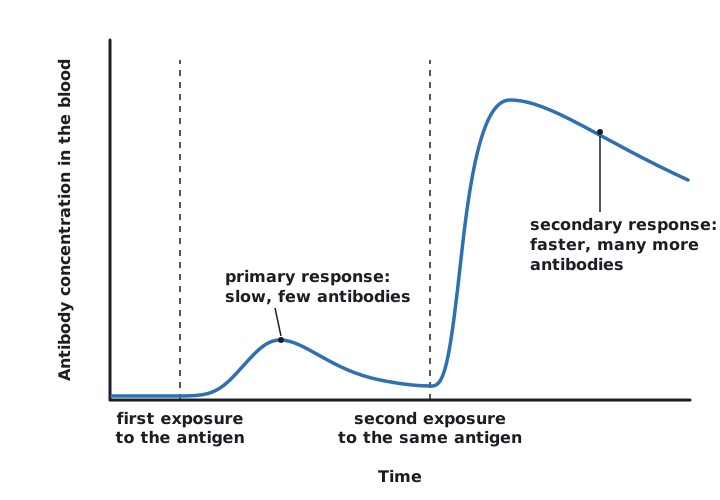 (opens full size in a new tab)
Vaccines and immunization
A vaccine contains antigens, or nucleic acids (DNA or RNA) with sequences that code for antigens. Antigens may be on killed or weakened pathogens, or be purified pathogen proteins. With an mRNA vaccine, the person's own cells use the RNA to make the antigen. Either way, the vaccine stimulates a primary immune response and the development of memory cells, so the person gains immunity to a specific pathogen without causing the disease. Immunization is the process of making a person immune, usually by vaccination.
Herd immunity
Members of a population are interdependent in building herd immunity. If a sufficient percentage of a population is immune to a disease, an infected person is unlikely to meet a susceptible person, so transmission is greatly impeded and epidemics are prevented. This protects people who cannot be vaccinated, such as newborn babies or people with weakened immune systems. The more transmissible the pathogen, the higher the percentage that must be immune.
Nature of science: vaccines are tested rigorously and the risks of side effects are minimal but not nil. The media often report research while evaluation by other scientists is still happening, so distinguish pragmatic truths from certainty.
Written and checked against the IB Biology SL specification · Updated October 2026