
Melatonin, epinephrine and control by the hypothalamus and pituitarySpec C3.1.11, C3.1.12, C3.1.13
In short
Melatonin is a hormone secreted by the pineal gland in a diurnal pattern: secretion rises in the evening darkness and falls in the morning light, helping to establish a cycle of sleeping and waking. Epinephrine from the adrenal glands prepares the body for vigorous activity. The hypothalamus and pituitary gland control the rest of the endocrine system.
Melatonin and circadian rhythms
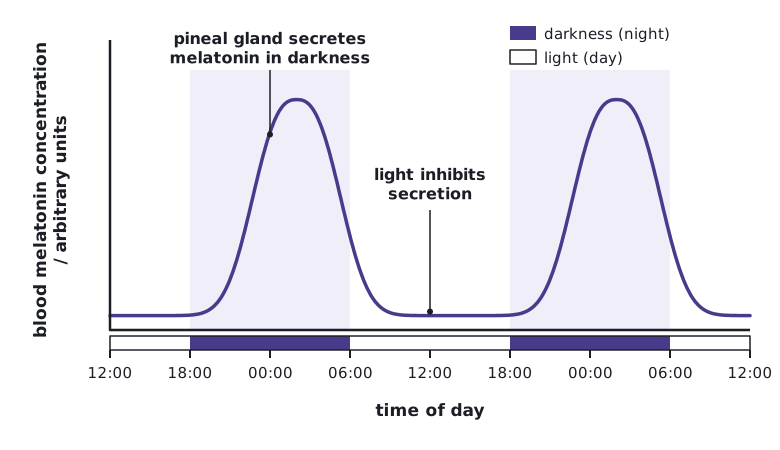
Circadian rhythms are cycles in body activity that repeat about every 24 hours. Melatonin is secreted by the pineal gland in the brain with a diurnal pattern: secretion increases in the evening as it gets dark, stays high during the night and falls to a low level in the morning. Light detected by the retina is signalled to the hypothalamus, which inhibits melatonin secretion during the day.
High melatonin levels promote sleepiness and a fall in body temperature; low levels in the morning allow waking. In this way melatonin modulates sleep patterns and helps to establish a cycle of sleeping and waking. Shifting the light–dark cycle, as in jet lag or night-shift work, disrupts this pattern.
 (opens full size in a new tab)
Epinephrine (adrenaline)
Epinephrine is secreted by the adrenal glands to prepare the body for vigorous activity, for example in response to danger or before a race. It has widespread effects, which together supply skeletal muscles with the oxygen and glucose they need for intense contraction:
- heart rate and stroke volume increase, so more blood is pumped per minute
- arterioles to skeletal muscles dilate; arterioles to the gut and skin constrict, diverting blood to the muscles
- airways (bronchioles) widen and ventilation rate increases, so more oxygen is absorbed
- glycogen in the liver is broken down to glucose, raising blood glucose concentration
- pupils dilate and mental alertness increases
The hypothalamus and pituitary gland
The endocrine system is controlled by the hypothalamus and pituitary gland. The hypothalamus, at the base of the brain, links the nervous and endocrine systems: it receives information from the nervous system and from the blood, and responds by sending signals (releasing hormones and nerve impulses) to the pituitary gland. The pituitary gland, below the hypothalamus, then secretes hormones that travel in the blood and regulate other endocrine glands and organs, for example thyroid-stimulating hormone (TSH), FSH and LH, growth hormone and ADH.
You only need a general understanding of hypothalamus–pituitary control. Differences between the anterior and posterior pituitary are not required.
Written and checked against the IB Biology SL specification · Updated October 2026