
Differential gene expression and specialisationSpec 3.18
In short
All the cells of an organism contain the same genes, but each type of cell expresses only some of them. The genes that are expressed are transcribed to give active mRNA, which is translated into specific proteins. These proteins either control cell processes, as enzymes, or determine cell structure, so cells become specialised in animals and in plants.
Every body cell of an organism is produced by mitosis from the zygote, so each contains the same genome. Cells differ because of differential gene expression: in each type of cell, only particular genes are switched on and transcribed to active mRNA. The other genes in that cell are not transcribed.
- Particular genes are switched on in a developing cell.
- These genes are transcribed to produce mRNA, which is processed into active mRNA.
- The mRNA is translated at ribosomes to give specific proteins.
- The proteins control cell processes (as enzymes) or determine cell structure, so the cell takes on its particular shape and function.
- Animals: in developing red blood cells the haemoglobin genes are expressed, so the cells fill with haemoglobin; in beta cells of the pancreas the insulin gene is expressed; in muscle cells the genes for contractile proteins (actin, myosin) are expressed.
- Plants: in cells of the leaf, genes for photosynthetic proteins are expressed, whereas in root hair cells they are not; in xylem cells, genes are expressed for the enzymes that make lignin, which thickens the wall.
This is how a stem cell becomes a specialised cell: a particular set of genes is switched on, and the proteins they code for control the cell's structure and function. It is also why a cell can contain a gene that it never expresses.
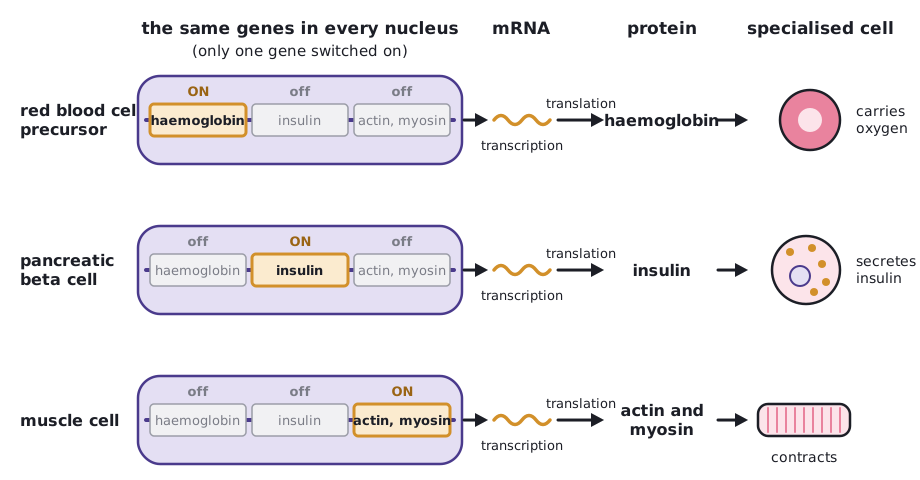 (opens full size in a new tab)
Specialised cells do not lose the other genes. They keep them all but do not transcribe them.
Written and checked against the Edexcel International AS Level Biology (XBI11) specification · Updated October 2026