
Monosaccharides, disaccharides and polysaccharidesSpec 1.2
In short
Monosaccharides are single sugar units, disaccharides are two joined together and polysaccharides are long chains of glucose. Starch (amylose and amylopectin) stores energy in plants and glycogen stores it in animals. Their compact, branched, insoluble structures store a lot of glucose without affecting water potential and can be hydrolysed quickly.
Carbohydrates contain carbon, hydrogen and oxygen. They are grouped by the number of sugar units in each molecule.
| Group | Size | Examples | Main features |
|---|---|---|---|
| Monosaccharide | One sugar unit (monomer) | Glucose, fructose, galactose (all C₆H₁₂O₆) | Small, soluble, sweet; glucose is the main respiratory substrate |
| Disaccharide | Two monosaccharides joined | Maltose, sucrose, lactose (all C₁₂H₂₂O₁₁) | Soluble, sweet; hydrolysed to monosaccharides before use |
| Polysaccharide | Many monosaccharides joined | Starch (amylose, amylopectin), glycogen | Large, insoluble, not sweet; hydrolysed to glucose when energy is needed |
In α-glucose, the –OH group on carbon 1 sits below the ring. Starch and glycogen are both made only from α-glucose units. Fructose and galactose are isomers of glucose: they have the same formula but the atoms are arranged differently.
Starch and glycogen
| Feature | Amylose | Amylopectin | Glycogen |
|---|---|---|---|
| Found in | Plants (part of starch) | Plants (part of starch) | Animals (liver and muscle cells) and fungi |
| Monomer | α-glucose | α-glucose | α-glucose |
| Bonds | α-1,4 glycosidic only | α-1,4 and α-1,6 glycosidic | α-1,4 and α-1,6 glycosidic |
| Branching | Unbranched | Branched (a branch every 20 to 30 units) | Highly branched (a branch every 8 to 12 units) |
| Shape | Coiled into a helix | Branched, less tightly coiled | Very compact, granular |
| Role | Energy store | Energy store, hydrolysed quickly from many ends | Energy store, hydrolysed very quickly from many ends |
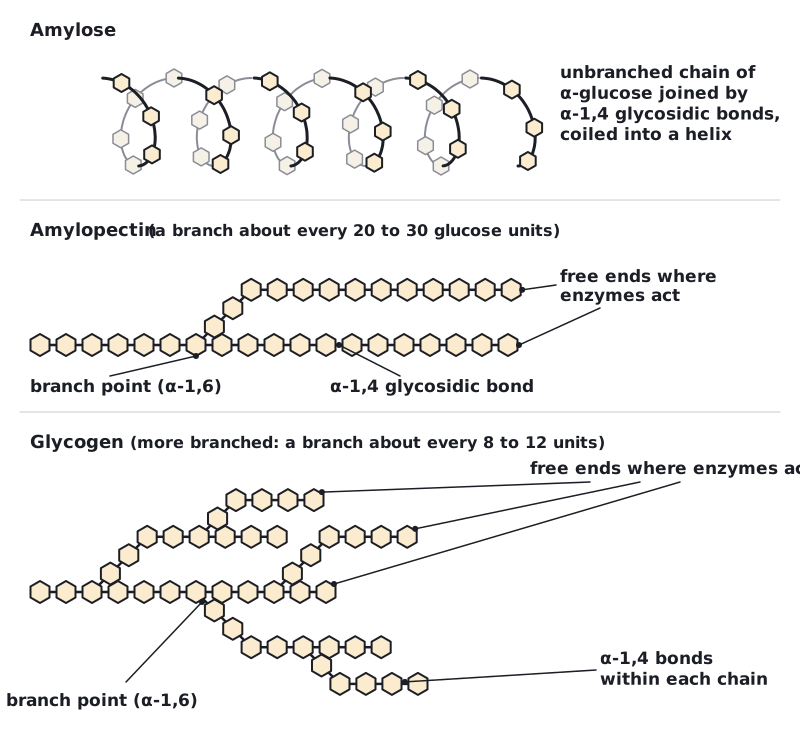 (opens full size in a new tab)
How structure relates to role
- Monosaccharides and disaccharides are small and soluble, so they are easily transported and glucose is quickly respired to release energy.
- Starch and glycogen are insoluble and too large to leave the cell, so they stay put as a store and do not change the water potential of the cell (no osmotic effect).
- The helical shape of amylose and the branching of amylopectin and glycogen make the molecules compact, so a large amount of glucose is stored in a small space.
- Branching gives many free ends. Enzymes can hydrolyse glucose from many ends at once, so glucose is released rapidly. This suits glycogen in animals, which have a high metabolic rate and need glucose quickly.
Starch is the plant store and glycogen is the animal store. Do not call glycogen 'animal starch' without saying it is more branched and so releases glucose faster.
Written and checked against the Edexcel International AS Level Biology (XBI11) specification · Updated October 2026