
Fertilisation in mammalsSpec 3.12
In short
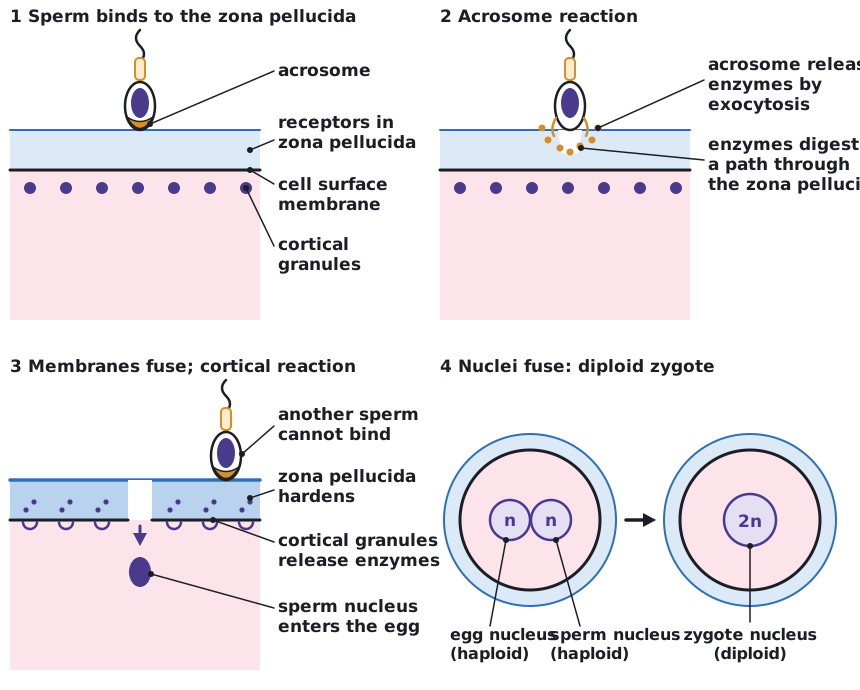
In mammalian fertilisation, a sperm binds to the zona pellucida and undergoes the acrosome reaction, releasing enzymes that digest a path through it. The sperm and egg membranes fuse and the sperm nucleus enters. The cortical reaction then hardens the zona pellucida to block other sperm, and the two haploid nuclei fuse to form a diploid zygote.
- Sperm swim towards the egg and pass through the layer of follicle cells.
- The head of a sperm binds to receptors in the zona pellucida.
- The acrosome reaction takes place: the acrosome membrane fuses with the sperm cell surface membrane and releases its enzymes by exocytosis. The enzymes digest a path through the zona pellucida.
- The sperm cell surface membrane fuses with the egg cell surface membrane, and the sperm nucleus enters the egg cytoplasm.
- The cortical reaction takes place: the cortical granules fuse with the egg cell surface membrane and release their enzymes. These change the zona pellucida so that it hardens and sperm can no longer bind to it.
- The haploid sperm nucleus and haploid egg nucleus fuse, which forms a diploid zygote. This fusion of nuclei restores the diploid number.
The cortical reaction prevents polyspermy (more than one sperm fertilising the egg). If a second sperm entered, the zygote would have three sets of chromosomes and could not develop normally.
 (opens full size in a new tab)
Link each reaction to its purpose: the acrosome reaction lets the sperm reach the egg membrane, and the cortical reaction stops further sperm entering.
Written and checked against the Edexcel International AS Level Biology (XBI11) specification · Updated October 2026