
Tissues, organs and organ systemsSpec 3.2
In short
In a multicellular organism, similar specialised cells working together form a tissue, different tissues working together form an organ, and several organs working together form an organ system. This division of labour lets each cell type do one job efficiently, so the whole organism functions in a coordinated way.
Cells in a multicellular organism are specialised for particular jobs. They are organised into levels of increasing complexity.
- A tissue is a group of similar cells (with any extracellular material they make) that work together to perform a particular function, for example squamous epithelium, cardiac muscle or xylem.
- An organ is a group of different tissues working together to perform a particular function, for example the stomach (epithelium, muscle, glandular and connective tissue) or a leaf.
- An organ system is a group of organs working together to carry out a major body function, for example the digestive system (stomach, small intestine, pancreas, liver) or the circulatory system.
Specialisation means each cell type can be adapted to one task, and the tasks are coordinated, so the organism as a whole is more efficient than a collection of identical unspecialised cells. The same pattern of organisation applies to animals and to plants.
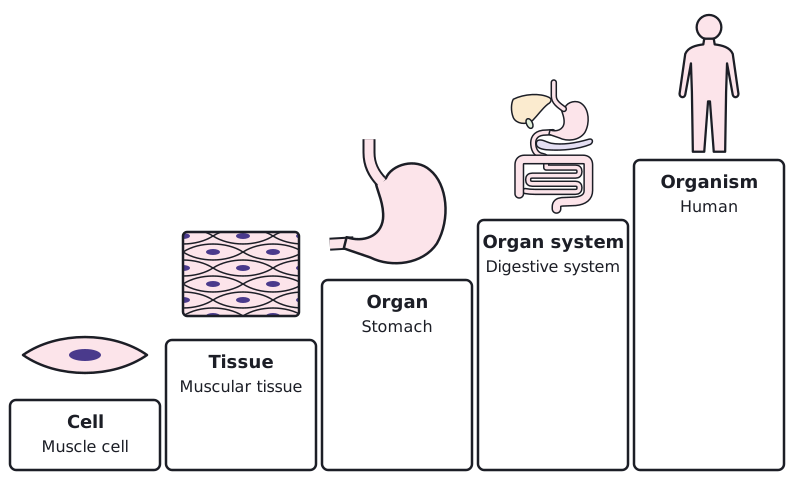 (opens full size in a new tab)
Written and checked against the Edexcel International AS Level Biology (XBI11) specification · Updated October 2026