
Genetic screening: carriers, PGD and prenatal testingSpec 2.17
In short
Genetic screening tests people or embryos for particular alleles. It can identify carriers of a recessive allele, test embryos made by IVF before implantation (PGD), or test a fetus in the uterus by amniocentesis or chorionic villus sampling (CVS). Results help people make decisions, but screening has risks and implications.
Identifying carriers
A DNA sample (from blood or a cheek swab) can be tested for the presence of a particular recessive allele. People with a family history of a condition such as cystic fibrosis can find out if they are carriers, and so assess the risk of having an affected child.
Pre-implantation genetic diagnosis (PGD)
- Eggs are fertilised in vitro (IVF) and the embryos develop to an early stage (about 8 cells; many clinics now wait until the blastocyst stage at about 5 days).
- One or two cells (or, at the blastocyst stage, a few cells from the outer layer) are removed from each embryo, and their DNA is tested for the faulty allele.
- Only embryos that do not carry the allele (or that are not affected) are implanted into the uterus.
Prenatal testing
| Feature | Amniocentesis | Chorionic villus sampling (CVS) |
|---|---|---|
| Sample | Amniotic fluid containing fetal cells. | Cells from the chorionic villi (part of the placenta). |
| Method | A needle is passed through the abdominal wall and uterus wall, guided by ultrasound, to remove fluid. | A needle is passed through the abdomen (or a tube through the cervix), guided by ultrasound, to remove a small sample of tissue. |
| Timing | From about 15 weeks of pregnancy. | From about 11 weeks of pregnancy (earlier). |
| Risk | Small risk of miscarriage. | Small risk of miscarriage (slightly higher than amniocentesis). |
| After | Fetal cells cultured; DNA or chromosomes analysed. | Fetal cells analysed directly, so results sooner. |
Implications of prenatal screening
- A positive result may lead parents to consider termination of the pregnancy, or to prepare for the birth of a child with the condition.
- Both tests carry a risk of miscarriage, including of an unaffected fetus.
- A result can cause anxiety, and an incorrect result (false positive or false negative) could lead to a wrong decision.
- Results show only that a fetus has a particular allele. They do not show how severe the condition will be, and for many conditions there is no cure.
- Test results about a fetus also give information about the genes of the parents and other relatives.
Do not describe these tests as treatment. They are screening tests: they give information. Be specific about risks, such as miscarriage, rather than saying 'it is dangerous'.
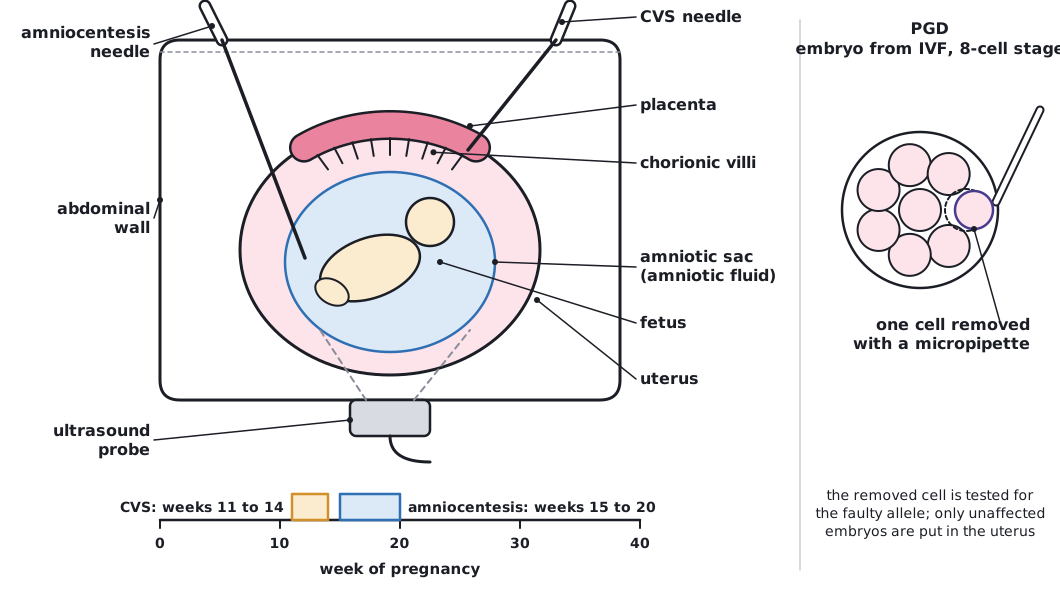 (opens full size in a new tab)
Written and checked against the Edexcel International AS Level Biology (XBI11) specification · Updated October 2026