
Gene loci and linkageSpec 3.9
In short
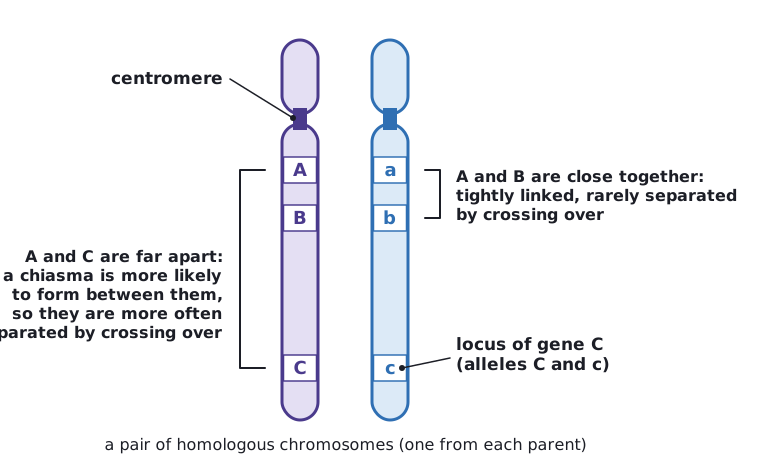
A locus is the location of a gene on a chromosome. Genes at different loci on the same chromosome are linked, which means they tend to be inherited together because they stay on the same chromosome during meiosis. Linkage is broken only if crossing over separates the alleles, and genes that are closer together are separated less often.
- Locus
- The location of a gene on a chromosome. Plural: loci.
- Linkage
- Genes on the same chromosome are said to be linked, because they tend to be inherited together.
Body cells are diploid (2n): they contain pairs of homologous chromosomes, one from each parent. Homologous chromosomes carry the same genes at the same loci, but may carry different alleles (versions) of each gene.
Genes on different chromosomes are inherited independently, because the chromosomes assort independently at meiosis. Genes on the same chromosome are linked: the alleles on one chromosome are passed on together in the same gamete. This means a dihybrid cross involving linked genes does not give the expected 9:3:3:1 ratio.
Linked alleles can be separated by crossing over during meiosis, which produces new combinations of alleles called recombinants. The further apart two loci are on a chromosome, the more likely a chiasma forms between them, so the more often the linkage is broken. Loci that are very close together are rarely separated, so they are inherited together almost always.
 (opens full size in a new tab)
A locus is a position, not a gene and not an allele. Say 'the location of a gene on a chromosome'.
Written and checked against the Edexcel International AS Level Biology (XBI11) specification · Updated October 2026