
Factors affecting the rate of enzyme-catalysed reactionsSpec 2.8
In short
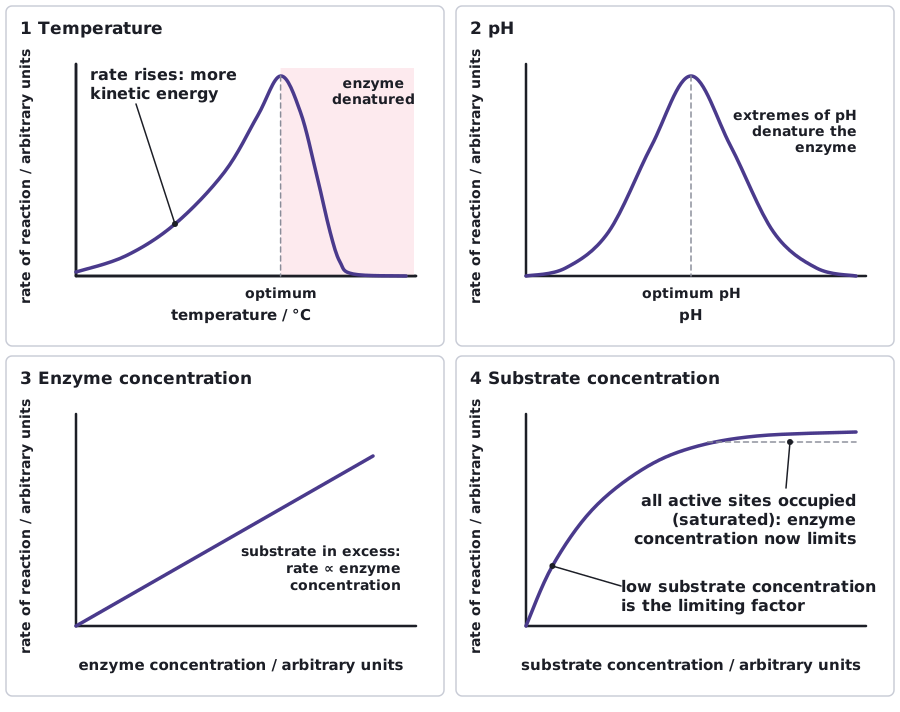
The initial rate of an enzyme-catalysed reaction depends on temperature, pH, enzyme concentration and substrate concentration. Rate rises with temperature to an optimum and then falls as the enzyme denatures. Each enzyme has an optimum pH. More enzyme or substrate raises the rate until another factor becomes limiting.
The initial rate of reaction is the rate at the very start, when the substrate concentration is highest and little product has built up. Measuring the initial rate makes comparisons fair, because the rate falls later as substrate is used up.
| Factor | Effect on rate | Explanation |
|---|---|---|
| Temperature | Rate rises to an optimum, then falls rapidly. | Below the optimum, molecules have less kinetic energy, so there are fewer collisions and fewer enzyme–substrate complexes form. Above the optimum, hydrogen and ionic bonds in the tertiary structure break, the active site changes shape and the enzyme is denatured, and substrate no longer fits. |
| pH | Rate is highest at the optimum pH and falls on either side. | Changes in H⁺ concentration change the charges on R groups and disrupt ionic and hydrogen bonds, so the active site changes shape and fewer enzyme–substrate complexes form. Far from the optimum pH the enzyme is denatured. |
| Enzyme concentration | Rate is proportional to enzyme concentration, if substrate is in excess. | More active sites are available, so more enzyme–substrate complexes form per second. At high enzyme concentration, substrate becomes limiting and the rate levels off. |
| Substrate concentration | Rate rises, then levels off at a maximum. | More substrate gives more collisions with active sites. When all the active sites are occupied (saturated), enzyme concentration is the limiting factor and rate stops rising. |
Enzymes at low temperature are inactive, not dead: the active site is not changed and activity returns on warming. Above the optimum, denaturation is permanent. Do not say enzymes are 'killed' or 'destroyed', because enzymes are not alive.
 (opens full size in a new tab)
Written and checked against the Edexcel International AS Level Biology (XBI11) specification · Updated October 2026